
What if the only thing standing between you and your most memorable meal is a single, misunderstood word on a menu? Many of our guests arrive with a craving for the rich, beefy luxury of the rib primal, yet they find themselves caught in the classic dilemma of prime rib vs ribeye steak. It’s easy to feel a bit of hesitation when you’re looking at a premium menu. You want to ensure the cut you choose matches your specific craving for texture and char without the fear of overpaying for the wrong experience.
We understand that a great dinner is about more than just hunger; it’s about the ritual of the meal and the confidence of a perfect choice. In this guide, you’ll discover the anatomical differences, flavor profiles, and preparation secrets that distinguish these two legendary beef cuts. We’re going to walk through everything from the importance of hand-cutting to why a slow-roasted crust offers a completely different soul than a seared steak. By the time you finish, you’ll be ready to pull up a chair by the fireplace and order with the authority of a true connoisseur.
Key Takeaways
- Understand that both legendary cuts originate from the same rib primal, yet their distinct identities are forged through vastly different preparation methods.
- Learn the key sensory differences in the prime rib vs ribeye steak debate, focusing on the buttery tenderness of a roast versus the smoky, charred crust of a seared steak.
- Master the art of the menu to confidently choose between the “melt-in-your-mouth” luxury of a slow roast and the satisfying, beefy bite of a hand-cut ribeye.
- Discover why traditional techniques like in-house hand-cutting and low-and-slow roasting are essential for preserving the rich marbling and flavor of the rib section.
Anatomy of the Rib Primal: Where Both Legends Begin
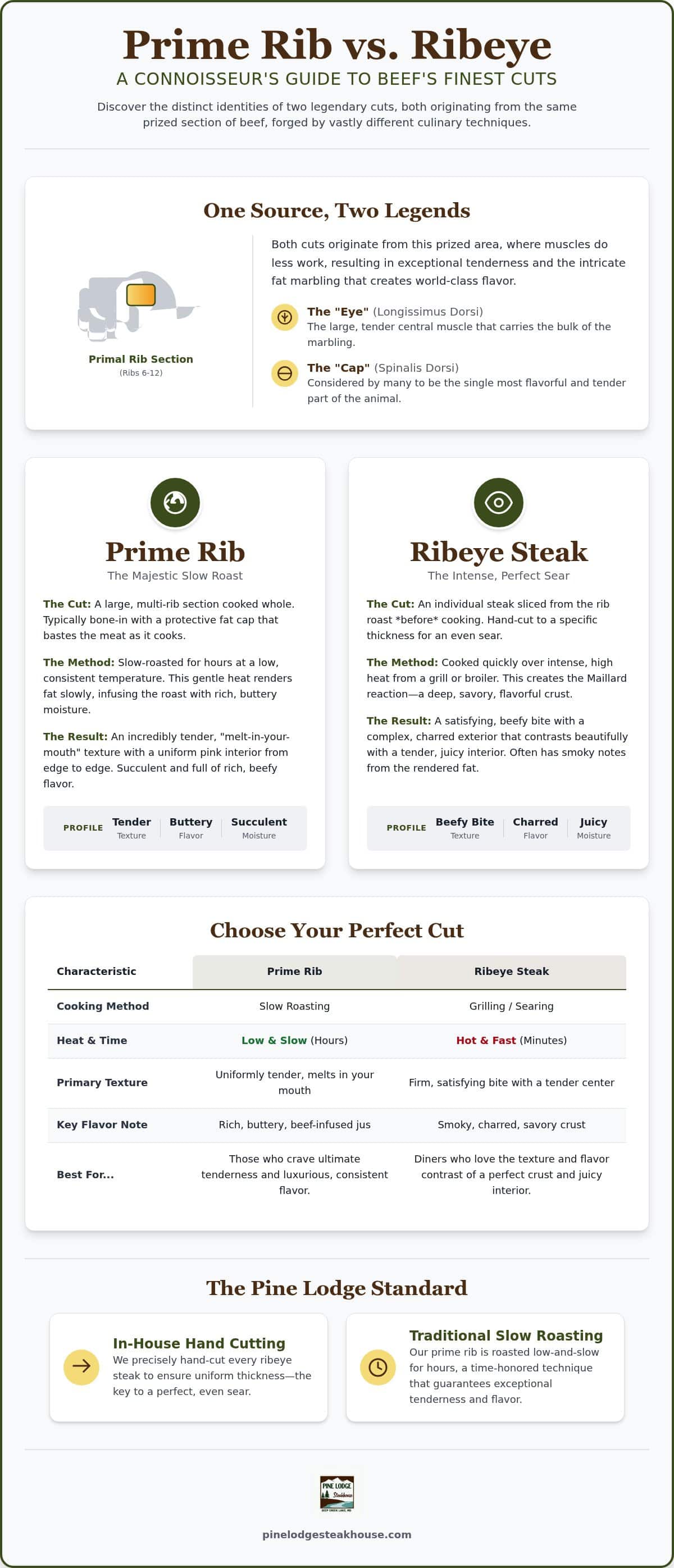
To truly appreciate the nuances of prime rib vs ribeye steak, you have to look at the source of the flavor. Both of these iconic cuts come from the same neighborhood: the beef primal rib section, specifically ribs six through twelve. This area is prized because the muscles here don’t do much heavy lifting. Because they remain relatively relaxed, they develop incredible tenderness and deep, intricate marbling that you won’t find in harder-working sections like the round or the chuck.
The star of this anatomical show is the longissimus dorsi, commonly known as the “eye” of the meat. It’s a large, tender muscle that carries the bulk of the marbling. Wrapped around this eye is the Spinalis Dorsi, or the ribeye cap. Many beef enthusiasts consider the cap to be the single most flavorful and tender piece of beef on the entire animal. The primary difference between these two legends lies in the butchery. Prime rib is kept as a large, majestic roast, while a ribeye is sliced into individual portions before it ever touches the heat.
The Anatomy of a Prime Rib Roast
A Standing rib roast is a multi-rib section of the primal rib cooked whole. We typically keep the bone in to enhance the flavor and provide a natural rack for the meat to rest on during the long roasting process. A thick, protective fat cap sits on top of the roast. As the heat works its magic, this fat renders down and naturally bastes the meat. This process infuses the roast with a rich, buttery moisture that defines the classic holiday experience. Because it’s cooked as one large unit, the meat retains a uniform, pink interior from edge to edge.
The Anatomy of a Ribeye Steak
When the focus shifts from the roast to the steak, the real distinction in the prime rib vs ribeye steak comparison comes down to individual craftsmanship. A ribeye can be served boneless or as a bone-in cut, such as a Cowboy or a Tomahawk steak. It centers on that marbled eye with the fat-rich cap wrapped tightly around the outer edge. To get the best results on a grill, we insist on precise hand-cutting here in McHenry. This ensures uniform thickness, which is the only way to achieve an even sear across the entire surface. Without that consistent thickness, you lose the delicate balance between the tender interior and the crust.
Preparation Methods: The Art of the Slow Roast vs. the Intense Sear
While they share a common origin, the environment of the kitchen transforms these cuts into two entirely different experiences. The choice between prime rib vs ribeye steak is a choice between the gentle patience of a slow roast and the aggressive intensity of a high-heat sear. One relies on time to coax out tenderness, while the other uses fire to create a complex, charred exterior that contrasts with a juicy center.
The heat source fundamentally changes how the beef’s fat behaves. In a roasting environment, the fat melts slowly, acting as a continuous internal basting liquid. On a grill or broiler, that same fat renders quickly and often drips onto the coals, creating a smoky vapor that perfumes the meat. This distinction defines the aromatic profile of your meal before you even take the first bite.
The Slow-Roasted Prime Rib Process
A great roast begins long before the oven is preheated. We start by aging the meat and applying a generous dry rub to build a seasoned exterior. The roast then enters a low-temperature environment for several hours. This gentle approach ensures the meat reaches a uniform pink color from edge to edge, preventing the dry, gray bands often caused by rushing the process.
Temperature control is a unique advantage here. Because a whole roast tapers at the ends, it naturally offers a range of doneness levels. The outer slices provide a perfect medium-well for those who prefer it, while the center remains a cool, tender rare. Once the roast leaves the oven, we insist on a long resting period. This allows the muscle fibers to relax and reabsorb their juices, ensuring that every slice of Slow Roasted Prime Rib stays succulent on the plate.
The Hand-Cut Ribeye Grilling Technique
The ribeye steak demands a completely different set of rules. This cut thrives on the Maillard reaction, the chemical process where high heat transforms proteins and sugars into a dark, savory crust. Because our steaks are hand-cut on-site, we can control the exact thickness required for a perfect sear. A thick-cut steak allows the exterior to develop a deep char without overcooking the delicate interior.
- Intense Heat: Open flames or high-heat broilers lock in moisture instantly.
- Fat Rendering: Rapid heat causes the internal marbling to “pop,” releasing a burst of beefy flavor.
- Texture Contrast: The goal is a crisp, salty crust that gives way to a buttery, tender middle.
This method highlights the precision of the butcher. A hand-cut steak ensures a superior crust-to-tender-center ratio, giving you that classic steakhouse experience where every bite offers both crunch and melt-in-your-mouth tenderness.
Flavor and Texture Profiles: Sensory Differences for the Diner
Choosing between prime rib vs ribeye steak isn’t just about selecting a cut of beef; it’s about choosing the physical sensation of your meal. Imagine the difference between a silk scarf and a well-worn leather jacket. Both are luxury items, but they offer entirely different sensory experiences. One is a study in delicate softness, while the other celebrates rugged intensity.
The texture of these two cuts creates the most immediate impact on the diner. Prime rib is famously buttery, often described as “melt-in-your-mouth” because the muscle fibers remain relaxed during the slow-roasting process. In contrast, the ribeye provides a beefy, “chewy” experience in the most satisfying way possible. It offers a resistance that rewards the diner, releasing a burst of juice with every bite. If you enjoy a meal that requires a bit of work from your steak knife to reveal its treasures, the ribeye is your champion. Those who prefer an even more delicate, buttery texture may also want to explore the best filet mignon Deep Creek Lake has to offer, as the tenderloin provides a completely different but equally luxurious experience.
Flavor profiles also diverge based on the cooking environment. A prime rib tastes like a concentrated, elevated version of a traditional Sunday roast. The fat remains soft and gelatinous, providing a rich, savory mouthfeel. The ribeye, however, carries a charred, smoky profile born from the fire. Its fat is rendered and crispy, providing salty, caramelized bits that punctuate the beefy flavor. We often use complex herb rubs to season our roasts over several hours, whereas a hand-cut ribeye usually needs little more than coarse salt, cracked pepper, and the kiss of a flame.
The Prime Rib Experience: Silk and Smoke
When we serve our slow-roasted prime rib, it arrives swimming in a pool of hot au jus. This light gravy enhances the natural beef drippings, ensuring every bite is saturated with moisture. To balance the intense richness of the fat, we always recommend a side of cool horseradish cream. This sharp, peppery condiment cuts through the silkiness of the beef, creating a bright contrast that wakes up the palate. It’s the ideal choice for those who crave the comforting texture of a premium pot roast but want the quality of a top-tier steakhouse.
The Ribeye Experience: Salt, Fat, and Fire
The ribeye is widely considered the “steak lover’s steak” because of its incredible marbling. To get the most out of this cut, it’s best enjoyed at Medium-Rare. This specific temperature allows the internal fat to fully melt and lubricate the meat without drying out the center. As you navigate the plate, you’ll eventually reach the Spinalis Dorsi, which is frequently called the “holy grail” of steak textures. This outer cap combines the tenderness of a filet with the deep, marbled flavor of the rib primal, offering a bite that is truly unparalleled in the world of beef.
Making the Choice: A Comparison Guide for Your Next Visit
Settling the prime rib vs ribeye steak debate often comes down to the spirit of your evening. If you’re here to celebrate a milestone or simply want to sink into the warmth of a slow-roasted classic, prime rib is the answer. It’s the ultimate comfort food, served with a side of tradition and a steaming cup of savory au jus that invites you to linger over every bite. On the other hand, the ribeye is for the diner who craves the ritual of the grill. It’s for those who want to hear the sear and taste the char, preferring the robust, bone-in flavor that only a high-heat environment can provide to the rib primal. If you’re looking to explore other spirited dining options in Maryland, you can check out Skyvibe Restaurant and Lounge for a unique Afro-Fusion menu.
Portion sizes usually reflect these different styles. A hand-cut ribeye often ranges from 12 to 16 ounces, providing a dense, protein-heavy meal that satisfies a rugged appetite. Prime rib is frequently served in larger, more visual slabs. You might see a 10-ounce lunch portion or a massive 16-ounce king cut. The choice of size depends on how much of that buttery, marbled fat you want to experience in one sitting.
The Diner’s Decision Matrix
Your appetite level plays a major role in this decision. A ribeye is often more filling due to the density of the rendered fat. Because the fat is integrated into the muscle fibers during the sear, it creates a heavy, satisfying richness that stays with you. Prime rib offers a silkier mouthfeel that feels slightly lighter on the palate despite its generous size. If your preference leans toward a specific level of doneness, the prime rib vs ribeye steak choice becomes even clearer. If you like your beef rare, prime rib is almost always the superior choice. The slow-roasting process keeps the meat consistently tender and red throughout. In the rustic lodge setting of McHenry, with our fireplaces crackling, many find that a hearty prime rib matches the cozy atmosphere perfectly — making it a natural centerpiece for birthday dinner restaurants Deep Creek Lake visitors seek out for milestone celebrations.
Pairing with the Pine Lodge Bourbon Selection
The right glass can elevate either choice. For a ribeye, we recommend high-rye bourbons. The spicy, peppery notes of the rye act as a perfect foil to the fatty richness of the steak, cleaning the palate between every decadent bite. For the herbal, seasoned crust of our prime rib, look toward a wheated bourbon. These smoother, sweeter profiles complement the delicate herbs without overpowering the natural flavor of the meat. You can learn more about pairing bourbon with hand-cut steaks to find your perfect match at our bar.
Ready to experience the difference for yourself? We invite you to reserve your table at Pine Lodge Steakhouse and discover your favorite cut tonight.
The Pine Lodge Standard: Hand-Cut and Slow-Roasted in McHenry
At Pine Lodge Steakhouse, we believe the choice between prime rib vs ribeye steak should be the hardest part of your evening. Once that decision is made, our job is to ensure the execution is flawless. We’ve spent over two decades perfecting the art of the rib primal right here in McHenry. While others might rely on pre-portioned cuts, we insist on hand-cutting every ribeye on-site. This allows our butchers to follow the natural marbling of each specific loin, ensuring that every steak hitting our grill has the ideal thickness for a perfect sear.
Our slow-roasted prime rib follows a similarly rigorous standard. It isn’t just about heat; it’s about the harmony of timing, temperature, and tradition. We season our roasts with a proprietary blend of herbs and spices, then let them rest in a low-heat environment for hours. This patience results in a roast that is consistently tender, juicy, and rich with flavor. Whether you choose the intense char of the steak or the buttery silk of the roast, you’re tasting a commitment to quality that has defined our kitchen since we first opened our doors.
A Tradition of Quality in Deep Creek Lake
We take immense pride in being a locally owned staple of the Deep Creek Lake community since 2002. Our restaurant was designed to be an extension of the mountain landscape, featuring a rustic lodge atmosphere complete with crackling fireplaces and expansive views. If you’re having trouble deciding on your main course, our “Prime Rib Bites” offer a unique solution. This signature appetizer features tender morsels of our slow-roasted beef, providing a perfect preview of the full roast experience while you browse our specialty bourbon selection.
Planning Your Visit to Pine Lodge Steakhouse
Located in the heart of the mountains, our dining room is a favorite destination for post-adventure dinners and family gatherings. We recommend arriving a bit early to take advantage of our Happy Hour, where you can explore our bourbon deals and settle into the cozy lodge environment. Whether you’re a local regular or a traveler visiting the lake for the weekend, we invite you to experience the definitive answer to the prime rib vs ribeye steak debate. View our full menu and plan your dinner at Pine Lodge Steakhouse to ensure your next meal is a legendary one.
If your travels take you from the mountains of Maryland to the shores of Lake Michigan, be sure to visit Edgewater Inn for a premier waterfront lodging experience that matches the luxury of a world-class meal.
Savor the Best of the Rib Primal Tonight
Choosing between these two legendary cuts is no longer a matter of guesswork; it’s a celebration of your personal palate. You now understand that while the rib primal provides the foundation, it’s the craftsmanship of the kitchen that defines the soul of your meal. Whether you crave the patient, buttery tenderness of our slow-roasted specialty or the bold, smoky intensity of a hand-cut steak, you can order with the confidence of a true connoisseur.
In the heart of McHenry, we honor these traditions every day by hand-cutting our steaks and tending to our roasts with the care they deserve. The debate of prime rib vs ribeye steak is best settled in person, surrounded by the rustic warmth of our lodge and the company of good friends. We invite you to pull up a chair by one of our fireplaces and let our team provide the high-quality experience you’ve been looking for near Deep Creek Lake.
Reserve Your Table at Pine Lodge Steakhouse and discover your favorite cut in the most welcoming atmosphere in the mountains. We look forward to hosting you for a meal you won’t soon forget.
Frequently Asked Questions
Is prime rib better than ribeye?
Neither cut is objectively better, as the choice depends entirely on your texture preference. If you enjoy a buttery, uniform tenderness, the slow-roasted roast is your best bet. If you prefer a smoky, charred crust with a firm bite, the ribeye is the champion. Both represent the pinnacle of the rib primal in the prime rib vs ribeye steak comparison.
Why is prime rib usually more expensive than other steaks?
Prime rib often carries a higher price point because of the labor-intensive roasting process and the lower yield from the whole roast. Unlike individual steaks that are cut and grilled quickly, a whole roast requires hours of oven time and precise temperature monitoring. This craftsmanship ensures that every slice meets our standards for tenderness and flavor.
Can I get a ribeye steak rare?
You can certainly order a ribeye rare, though most experts suggest medium-rare for the best experience. At a rare temperature, the internal marbling doesn’t have enough time to fully melt and lubricate the meat. A slight increase in heat allows that fat to render, which creates the deep, beefy flavor that ribeye lovers crave.
Does prime rib always come with a bone?
Prime rib does not always come with a bone, though many connoisseurs prefer the bone-in version for the added flavor it provides during the roast. We offer various cuts to suit your specific preference. Whether it’s bone-in or boneless, the quality of the meat and our signature slow-roasting process remain the same.
What is the best doneness for a ribeye steak?
Medium-rare is widely considered the gold standard for a ribeye steak. This temperature reaches about 130 to 135 degrees, which is the sweet spot for rendering the heavy marbling without toughening the muscle fibers. It ensures you get the maximum flavor from the fat while keeping the center tender, juicy, and perfectly seared.
Is prime rib served every day at Pine Lodge Steakhouse?
We take great pride in our slow-roasted prime rib and strive to offer it as a staple of our hospitality. Since each roast requires many hours of patient cooking, we recommend making a reservation or checking our daily offerings to confirm availability for your visit. It remains one of the most popular choices for our guests here in McHenry.
What is the difference between a Cowboy Ribeye and a standard Ribeye?
A Cowboy Ribeye is simply a bone-in ribeye with a portion of the rib bone left attached. This differs from a standard ribeye, which is typically served boneless. The bone acts as an insulator during the searing process, often leading to a juicier result and a more dramatic, rustic presentation on your plate.
Why is it called “Prime” rib if it isn’t always USDA Prime grade?
The word “prime” in this context refers to the anatomical primal cut, not necessarily the USDA grade. While the USDA uses “Prime” to denote the highest marbling score, the term for the roast has been used for generations to describe the best part of the rib section. We focus on sourcing high-quality beef that meets our strict standards for marbling.