
A group dinner gets easier when the menu is simple and every task has an owner. To learn how to plan a group dinner easily, start with the people who need to be there, settle on a date, then build the meal and divide the work around the headcount. For a casual gathering, offering two or three date options can help you find a time that works.
Bringing people together over a warm meal should feel welcoming, not like a second job. When scheduling, food preferences, shopping, and last-minute details pile up, planning can become tangled. A few clear decisions help keep the evening relaxed for both host and guests.
This guide shows how to plan a group dinner easily, from setting the guest list and choosing a date to picking a manageable menu and sharing responsibilities. You’ll also find practical ways to account for dietary needs, clarify what guests should bring, and keep the meal simple, whether you’re cooking at home or meeting at a restaurant. A little structure leaves more room to enjoy the conversation.
Key Takeaways
- Set the guest list around your hosting capacity and the purpose of the gathering, whether that’s catching up with close friends or helping people connect.
- For a casual dinner, offer two or three date options and give guests a clear response deadline.
- Keep the menu manageable by accounting for dietary needs, choosing dishes that suit the group, and assigning specific dinner tasks.
- Make dessert and drinks easier to serve by choosing crowd-friendly options and clarifying what’s hosted or brought by guests.
- For a restaurant dinner, share an accurate headcount and settle practical details like the reservation and how the check will be handled.
Planning menus and assigning dinner responsibilities
Plan around the group’s needs, then give each person a clear role. These steps help coordinate food, timing, and cleanup without leaving key decisions until dinner.
-
Choose a Dinner Format
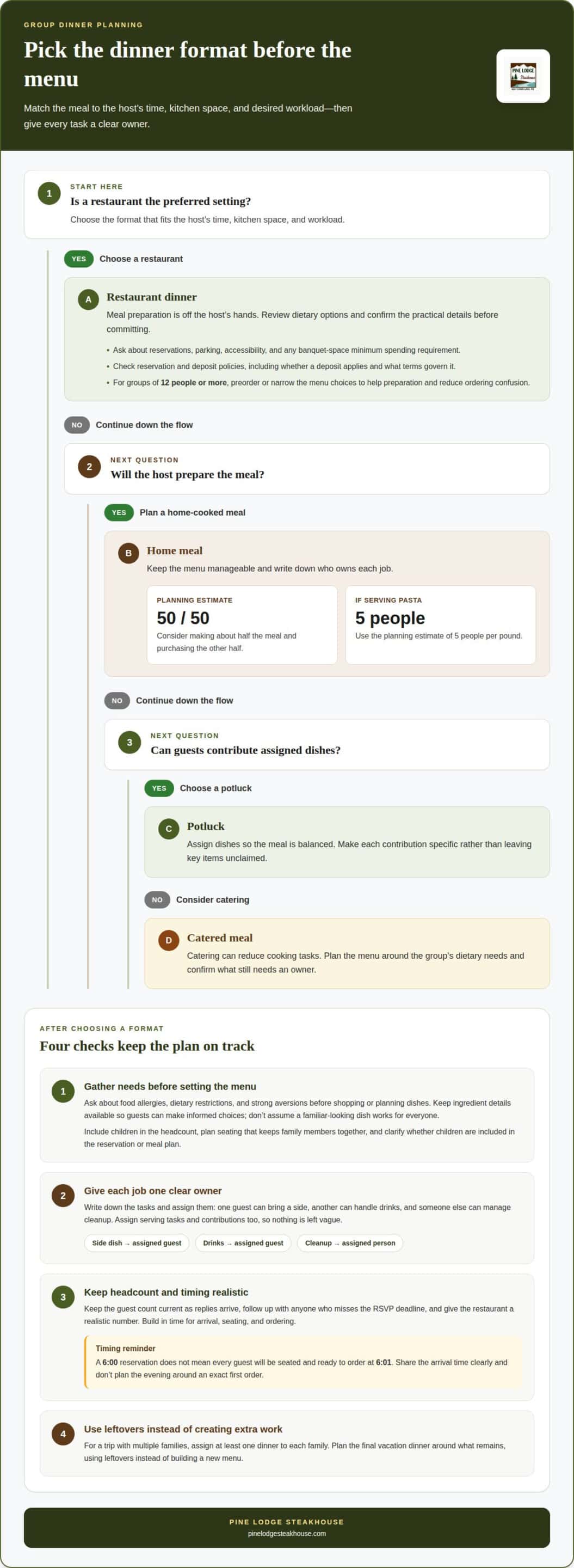
Choose a restaurant, potluck, or catered meal based on the host’s time, kitchen space, and desired workload. For a restaurant, review the menu for dietary options and ask about reservations, parking, accessibility, and any minimum spending requirement for banquet space. For a potluck, assign dishes to create a balanced meal. Catering can reduce cooking tasks, while a restaurant takes meal preparation off the host’s hands.
For groups of 12 people or more, preorder or narrow menu choices to help the restaurant prepare and reduce ordering confusion. Ask about reservation and deposit policies before committing, including whether a deposit applies and what terms govern it.
-
Accommodate Families and Dietary Needs
Ask guests about food allergies, dietary restrictions, and strong aversions before shopping or setting the menu. Then review the restaurant menu or plan suitable dishes for a home meal. Keep ingredient details available so guests can make informed choices. Don’t assume a familiar-looking dish works for everyone.
For families with children, include them in the headcount and plan seating that keeps family members together. Choose a mealtime and menu that suit the group, and clarify whether children are included in the restaurant reservation or meal plan. A shared table and straightforward choices can make ordering easier.
-
Assign Responsibilities and Plan for Leftovers
Write down each task and assign an owner: one guest can bring a side, another can handle drinks, and someone else can manage cleanup. For a dinner at home, consider making about 50% of the meal and purchasing the other 50%. If pasta is on the menu, use the planning estimate of 5 people per pound.
When multiple families travel together, assign at least one dinner to each family. Plan the final vacation dinner around leftovers, using what remains instead of creating a new menu. This gives the group a simple way to use extra food.
-
Avoid Common Planning Mistakes
Set the menu after gathering dietary needs, and assign each contribution, serving task, or cleanup job to a specific person. Keep the headcount current as guests reply, follow up with anyone who misses the RSVP deadline, and give the restaurant a realistic guest count.
Build in time for arrival, seating, and ordering. A 6:00 reservation doesn’t mean every guest will be seated and ready to order at 6:01. Share the arrival time clearly, and avoid planning the evening around an exact first order.
Choosing a guest list based on hosting capacity and gathering goals
Start by matching the guest list to your space and the purpose of the evening. A focused invitation list makes it easier to plan conversation, seating, and the overall feel of dinner.
- Decide what the gathering should accomplish. For a relaxed catch-up, invite one or two close friends and leave time for unhurried conversation. To strengthen existing relationships, keep the group small enough for everyone to speak comfortably. If you’re building new connections, invite up to four people you don’t know well yet. A clear goal prevents adding guests just because the list feels incomplete.
For guests from different social circles, choose a smaller table where introductions can happen naturally. One approach is to invite five guests, or six people including the host. If the aim is to help people connect, about five guests can keep conversation manageable without making dinner feel formal.
- Match the headcount to your hosting capacity. Count everyone who will attend, including yourself and any children, before sending invitations. Consider the available seats, table space, and whether guests can converse comfortably. A smaller dinner of two to four guests can make it easier to talk with everyone. For example, inviting two couples from a child’s school creates a defined group with a shared connection.
Think about the shape of the gathering, not just the total headcount. Dinner with four friends and the host makes five people, a size that can work well for a close-knit group. If the guest list includes several households, consider whether the table and room let everyone join the same conversation. Choose a number that fits the space and purpose of the evening.
- Build the invitation list deliberately. Write down the people essential to the occasion first, then add guests who suit its purpose and fit the available space. To connect separate friend groups, invite five guests, or six including the host. For a quieter evening, invite two to four people. These are suggestions, not rules: let your space and relationships guide the final list.
Before inviting the whole group, consider who may feel comfortable arriving together and who might benefit from a warm introduction. A short note explaining how guests know one another can help you plan conversation and seating. Once the guest count and occasion are clear, reserve a table that suits the gathering.
For a dinner with two families from a child’s school, the host kept the list to two couples, suggesting two to four guests when a smaller group makes conversation easier. For different social circles, the host recommends around five guests, or six people including the host. Another close-knit dinner included four friends and the host. To build new relationships, invite up to four people you don’t know well yet.
Crowd-friendly desserts and group drinks
Choose desserts that are simple to serve and drinks guests can select easily. A little planning helps prevent a crowded kitchen, unclear drink arrangements, and too many last-minute decisions.
- Choose a dessert that serves easily. For dinner at home, consider a cake, cookies, fruit, or a tray of brownies. These can be portioned without assembling individual desserts during the meal. If you’re serving several sweets, choose different textures, such as soft cake and crisp cookies. Keep serving tools nearby so guests can help themselves without interrupting conversation.
For a restaurant gathering, decide whether dessert is part of the planned meal or an optional finish. Tell the restaurant in advance about a celebration dessert, cake, or special toast. This helps give the meal a clear ending and avoids surprises during service. Choose one dessert to share if the group wants a simple, communal finish.
- Keep dietary needs in view. Select sweets with guests’ stated restrictions in mind. For example, serve fruit alongside a baked dessert or offer a clearly identified alternative for someone avoiding an ingredient. Keep packaging or ingredient information available for packaged treats. For homemade desserts, write down the ingredients so guests can make informed choices.
Don’t assume a dessert suits everyone just because it looks plain. Toppings, fillings, and garnishes can change what a dish contains. Keep each dessert’s serving utensil with it, and label options with their names and key ingredients. This helps guests choose without repeatedly asking the host.
- Plan a clear drinks selection. Offer water alongside a small selection of other drinks, such as sparkling water, iced tea, or lemonade. For an adult gathering, decide whether wine or cocktails suit the occasion, and include a nonalcoholic option. At home, put glasses and drinks where guests can find them. At a restaurant, share any hosted-drink plans before dinner.
State in the invitation whether drinks are hosted or paid for separately. This prevents guests from making different assumptions. If guests are bringing drinks, assign the contribution directly rather than leaving everyone to guess what’s needed. Keep the selection suited to the meal and the gathering.
- Make serving part of the plan. Decide who will bring out dessert, pour drinks, or refill water, especially if the host is also serving the meal. Set out napkins, plates, and serving utensils before guests arrive. For a restaurant dinner, choose in advance whether dessert will be ordered individually or shared. A clear plan keeps the final course smooth and leaves more time for conversation.
Deciding whether to propose one date or several options
For a larger dinner, choose a date around essential guests’ availability, then send a save-the-date early. For a casual group, offer two or three date options and set a reply deadline.
- Decide how much flexibility the gathering needs. Choose one date if the occasion has a fixed day or key guests already agree on their availability. For a casual dinner, offer two or three possible dates and ask guests to identify what works. Set a firm reply deadline, then choose the date that suits the people who need to attend. Avoid an open-ended poll that leaves the decision unresolved.
For a larger event, settle the date first and send a save-the-date early. This gives guests time to protect the evening before the full invitation arrives. The more people whose schedules matter, the more useful it is to choose a date around their availability rather than convenience alone.
- Allow lead time that fits the guest group. For friends from different social circles, send invitations 14 to 30 days ahead. For new friends, the suggested window is 7 to 20 days ahead. A core group of friends can receive invitations 3 to 14 days ahead. For one close friend or couple, invite them 3 to 14 days ahead or on the morning of the gathering.
Use those time frames as a planning guide, not a substitute for the event’s needs. A dinner involving travel or several households requires more coordination than a spontaneous meal with a close friend. If the occasion calls for a restaurant reservation, allow time for guests to reply before confirming the headcount.
- Make the invitation complete. Include the date, arrival time, restaurant name if relevant, occasion, and RSVP deadline. Add practical notes about cost, children, dress, or transportation when they apply. State whether drinks are hosted or paid for separately so guests understand the arrangement before arriving.
A clear invitation also reduces follow-up messages. For example, give the arrival time separately from the expected dinner start. If the plan includes a cake, decorations, or a special toast, tell the restaurant in advance. Guests can then plan around the actual gathering instead of guessing at important details.
- Close the loop after sending invitations. Track replies against the RSVP deadline and follow up with anyone who hasn’t responded. Once the date is set, repeat it consistently in updates so nobody relies on an outdated option. Give the restaurant a realistic headcount after responses come in.
Before dinner, decide how the bill will be handled, especially for a large group. Settling this ahead of time avoids a new decision at the end of the meal. A confirmed date, clear invitation, and accurate headcount make the gathering easier to coordinate.
Easy group dinner menus
To plan a menu smoothly, choose dishes that are easy to prepare, portion, and serve. The goal is a satisfying meal without a crowded kitchen or long waits between courses.
- Choose a main dish and a few sides. For a home dinner, pair baked pasta with green salad and bread, or serve roasted chicken with potatoes and vegetables. One shared main keeps preparation straightforward, while complementary sides make the table feel generous. A substantial soup can also anchor a meal when the weather is below 90 degrees Fahrenheit. Add bread or salad, and keep toppings in separate bowls.
For pasta, use the planning estimate of 5 people per pound. Select dishes that can be prepared ahead or served together, rather than cooking several separate entrees at once. A good way to learn how to plan a group dinner easily is to choose a menu that fits your kitchen and serving setup.
- Match the dishes to how you’ll serve them. A casserole or stew can be portioned from one dish, while individually plated courses need more hands and timing. For a buffet, set out plates before arranging the main dishes and sides. Choose food that holds well while guests arrive, such as bread or a room-temperature salad, and time hot dishes to finish closer to serving.
Avoid planning a menu that requires every dish to finish at once. Prepare dessert earlier, for example, and leave one main cooking task for dinner time. If you’re considering how to plan a group dinner easily, let the serving method guide your menu choices.
- Set expectations for the bill. There’s no single typical cost per person for a group dinner in the United States. The total depends on the venue, menu, drinks, and whether guests order individually or share dishes. Agree on the spending approach before dinner, then decide whether everyone pays for their own order or shares the bill evenly.
For shared dishes, clarify how their cost will be divided. State whether drinks are hosted or paid for separately so guests understand the arrangement beforehand. A clear plan helps prevent an unexpected discussion at the end of dinner.
- Make the invitation and RSVP useful. Include the date, arrival time, location or restaurant name, occasion, and reply deadline. Add relevant notes about cost, children, dress, or transportation. Ask guests to mention allergies or dietary restrictions in their reply, then use the headcount to plan portions and shopping.
Keep the RSVP focused on information that affects the meal. For example, ask guests to identify dietary needs rather than choosing from a lengthy menu in advance. If a restaurant gathering suits your group, plan a restaurant group dinner and enjoy a meal without preparing it at home.
Pine Lodge Steakhouse
Pine Lodge Steakhouse offers a restaurant option for groups who would rather skip the cooking and coordination at home. It’s a fitting setting for a shared dinner centered on a carefully prepared meal and time around the table, located near Deep Creek Lake in McHenry.
Guests can choose from Hand-Cut Steaks, cooked to order to each guest’s requested temperature, Slow Roasted Prime Rib, and Creamy Crab Soup. The full bar offers specialty bourbons for those who would like a drink with dinner. This gives the group choices while letting the host spend less time preparing food at home.
If you’re planning a group gathering, contact Pine Lodge Steakhouse to discuss your dinner.
Make the Next Gathering One to Look Forward To
A well-planned dinner can be more than a single evening. It can become a chance to reconnect, welcome someone new, or mark a moment worth sharing. Turn your plan into an invitation, then leave room for conversation and celebration.
If you’re figuring out how to plan a group dinner easily, choose an approach that lets you be present with your guests instead of managing every detail at the table. A restaurant gathering can help when you’d rather enjoy the evening than cook at home. Keep the occasion at the center and the rest warm and uncomplicated.
Plan your group dinner at Pine Lodge Steakhouse, and look forward to a welcoming evening shared around the table.
Frequently Asked Questions
What are the steps for planning a group dinner?
Plan a group dinner by naming one organizer, setting the gathering’s purpose, and keeping decisions in one shared note. Record confirmed guests, food needs, assigned tasks, and unresolved details. Before dinner, review the note and identify a backup for important jobs, such as bringing a dish or greeting guests. This simple record keeps late changes from getting lost in separate messages.
How do you find a date and time that works for everyone?
Find a workable date by asking essential guests about unavailable days first, rather than collecting open-ended suggestions from the whole group. Offer the remaining choices with a firm reply deadline, then select the date that suits the key guests. For dinner near Deep Creek Lake, factor travel plans into the timing so guests can choose an arrival time that works for their evening.
How do restaurant reservations and deposits work for large groups?
Before committing, ask the restaurant about its reservation and deposit policies, including whether a deposit applies and what terms govern it. For groups of 12 or more, preorder or narrow the menu choices to help the restaurant prepare.