
White wine can work with prime rib, provided it has enough body and grip to stand alongside the rich roast. If you’re deciding what wine pairs with prime rib, consider a skin-contact white or orange wine; full-bodied whites and orange wines are served at 44 to 55°F (7 to 12°C). Crisp, lean whites and light reds are less suited to the meat.
A bold red is a natural thought for a celebratory roast, but its structure and savory character matter as much as its color. Firm tannins can taste smoother alongside the meat, while fruit and herbal notes complement its flavor. This guide explains how to choose by wine style, cooking method, doneness, and seasoning, so you can find a balanced pairing for the table.
Key Takeaways
- White wine can suit prime rib when it has body and grip; skin-contact whites and orange wines are worth considering.
- Look for good fruit, savory herb notes, and enough tannin to balance the roast’s richness.
- Let the cooking method and accompaniments guide your choice: grilled meat, red wine jus, herbs, and peppercorn sauce each favor different flavor profiles.
- Argentine Malbec brings dark-fruit and spice notes, while Cabernet Sauvignon and Syrah offer firmer structure and savory character.
- Compare classic options such as Rioja, Barolo, and Rhône wines with the roast’s doneness, cut, and seasoning.
1. Can You Pair Prime Rib with White Wine?
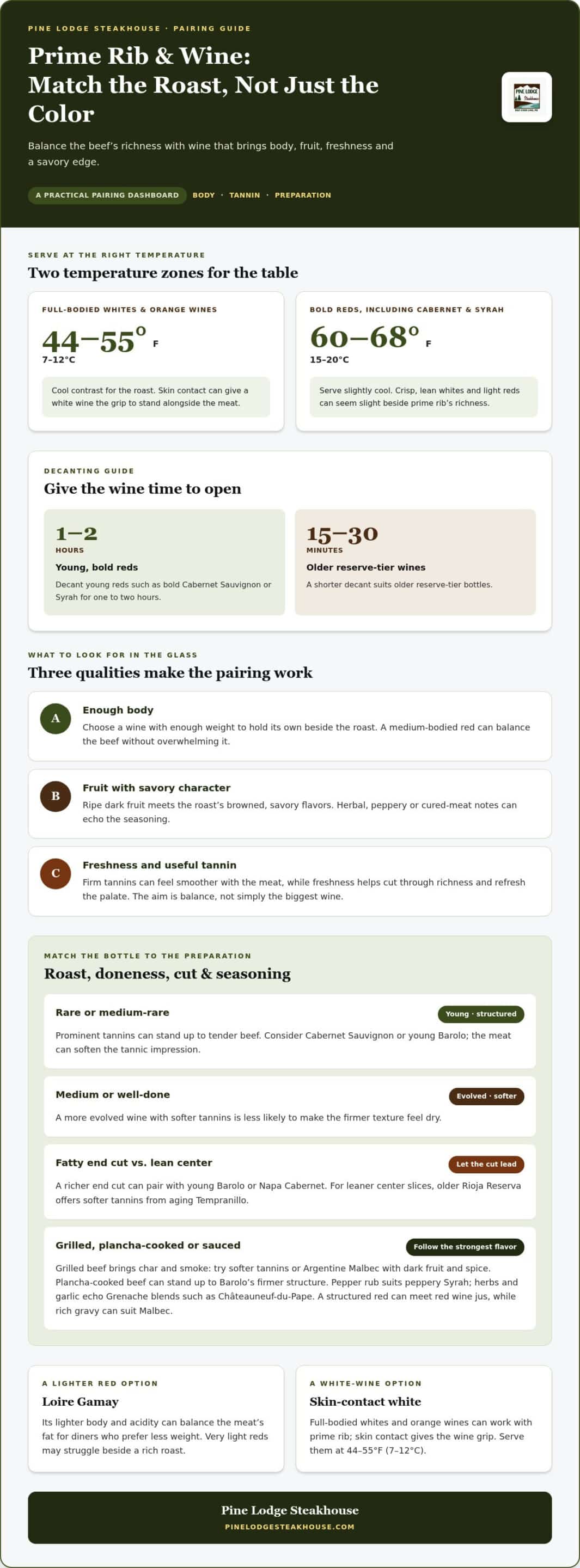
Yes. Full-bodied white wine and skin-contact white or orange wine can work with prime rib. Skin contact gives the wine enough grip to stand alongside the roast, while a crisp, lean white can seem slight beside its richness. Serve full-bodied whites and orange wines at 44 to 55°F (7 to 12°C) for a cool, measured contrast.
Classic red pairings include Cabernet Sauvignon, Syrah, and aged Rioja Reserva. Cabernet’s structure and dark-fruit character suit a rich rib roast, while Syrah’s peppery notes echo black-pepper seasoning. Rioja Reserva offers a more developed profile. If the table includes several sides, choose a wine that complements the beef without overpowering milder dishes such as potatoes.
Match the bottle to the sauce as well as the roast. Red wine jus has concentrated savory flavor, so a structured red can meet it without disappearing. Domaine de Santa Duc 2009 Gigondas is one suggested match for prime rib served with red wine jus. Rich gravy can also suit Malbec, whose dark fruit and spice complement the sauce. For herb-and-garlic seasoning, a Grenache blend such as Châteauneuf-du-Pape echoes those aromatic notes.
Grilled prime rib brings char and smoke, so look for wines with softer tannins that won’t mask the meat. Argentine Malbec is a useful match for barbecue, with dark-fruit and spice notes that suit a grilled surface. Plancha-cooked prime rib can stand up to a firmer pairing, such as Barolo. If the roast comes with several sauces, match the wine to the strongest flavor on your plate, whether pepper, herbs, or jus.
Serve bold reds such as Cabernet Sauvignon and Syrah slightly cool, at 60 to 68°F (15 to 20°C). Decant young, bold reds for one to two hours; older reserve-tier wines need 15 to 30 minutes. Full-bodied whites and orange wines are served cooler, at 44 to 55°F (7 to 12°C).
There’s no single price range that defines good value for a prime rib pairing. Judge the bottle by its balance, style, and fit with the roast and sauce, rather than choosing the most powerful wine. For a nonalcoholic option, serve sparkling water with lemon alongside the beef; unsweetened black tea also offers a brisk contrast to rich gravy.
2. Wine characteristics that complement prime rib
Build the pairing around three qualities: enough body for the roast, fruit to meet its savory depth, and freshness to keep each bite lively. A medium-bodied red often balances these elements without overwhelming the beef. Cabernet Sauvignon brings dark fruit and structure, while Syrah adds savory herb and pepper notes. The goal isn’t simply to choose the biggest wine, but to find one whose flavor and weight hold their own beside the meat.
Tannin deserves attention because it changes alongside food. Firm-tannin reds can taste smoother with prime rib: salt softens the perception of tannin, while the meat reduces the structure and astringency of red wine tannins. Tannins can also make red meat seem less rich. That interplay explains why a structured wine may feel more approachable with food than on its own.
Fruit connects the wine to the roast’s browned, savory flavors. Look for ripe dark fruit alongside savory herb notes, rather than sweetness alone. Cabernet Sauvignon can offer cassis-like fruit and structure; Syrah can bring pepper, cured-meat aromas, and fresh red and black fruit. Choose Cabernet for dark-fruit depth or Syrah when pepper and savory character suit the seasoning.
Acidity matters, too. A fresh, medium-weight red can cut through prime rib’s richness and refresh the palate between bites. Loire Gamay is a lighter-bodied example whose acidity can balance the meat’s fat. It may suit diners who prefer less weight, though very light reds can struggle beside a rich roast. Consider the wine’s body along with its fruit and tannin.
Mourvèdre from Bandol offers another useful model: tannin and structure without heavy oak, along with savory flavors that complement seasoning. This balance can work especially well when herbs stand out in the roast. When comparing labels, look for ripe fruit, freshness, and a savory edge. A heavily oaked wine may crowd those flavors instead of letting the beef lead.
Try a simple tasting step before serving: take a small sip, then taste the prime rib with its seasoning. Notice whether the wine’s tannins feel softer and its fruit more defined alongside the food. If you’d rather enjoy a prepared roast with a considered pairing, reserve a table for your next dinner.
3. Wine choices for different roast preparations
The roast’s surface, doneness, and cut can all affect the best wine choice. First identify whether the beef is roasted, grilled, or plancha-cooked. Then consider the slice: a fatty end piece can suit a younger, firmer wine, while a leaner center slice pairs well with softer tannins. This keeps the pairing aligned with the meat instead of relying on one bottle for every preparation.
For rare or medium-rare prime rib, try a young wine with prominent tannins. Its structure stands up to the tender beef, while the meat softens the tannic impression as you eat. Cabernet Sauvignon is a familiar choice; young Barolo is another structured option. With medium or well-done prime rib, consider a more evolved wine with softer tannins, which is less likely to make the firmer texture feel dry.
Slice location matters, too. Young Barolo or Napa Cabernet can match a richer, fattier end cut, where the meat’s richness meets the wine’s firm structure. For leaner center slices, older Rioja Reserva offers softer tannins from aging Tempranillo. If the roast will be served in several cuts, choose a balanced wine that works with each, rather than one so powerful it overwhelms the leaner slices.
Grilling adds char and smoke, so choose a red with soft tannins that leaves room for the beef’s flavor. Peppery Syrah can complement a pepper rub, while a fresher red can keep the char from making the pairing feel heavy. For plancha-cooked prime rib, Barolo’s firm tannins and acidity offer a more structured match for the seared surface. The cooking method helps determine whether softness or firmness matters more.
A roast served with red wine jus calls for a wine that can meet the sauce’s concentrated savory character. Domaine de Santa Duc 2009 Gigondas is a specific pairing for prime rib with red wine jus. For herb seasoning, consider a Grenache blend such as Châteauneuf-du-Pape. Peppercorn sauce can favor Syrah, whose pepper notes echo the seasoning instead of competing with it.
Build the pairing in a few steps: identify the cooking method, note the main seasoning, then account for doneness and cut. A rare end slice with black pepper points toward a young, structured red; a well-done center slice with herbs favors a more evolved, softer wine. These details help you choose more precisely than grape name alone.
4. Argentine Malbec, Cabernet Sauvignon, Syrah, and Bonarda
Argentine Malbec is a natural match for prime rib when you want dark fruit, spice, and supple tannins. These qualities balance the beef’s richness without making each bite feel overly dry. Malbec also suits barbecue-cooked prime rib, where ripe fruit meets smoky, browned edges. Look for a style with enough freshness to keep the pairing lively.
Argentine Cabernet Sauvignon offers a firmer frame. Its robust structure, cassis, and black-pepper notes suit deeply savory beef, especially with a pepper crust. Choose it when you want more grip than Malbec provides. For a gentler contrast with the same roast, try Argentine Malbec and notice how its softer tannins shift the balance.
Syrah brings a different kind of savory depth. Southern Rhône Syrah is known for pepper, cured-meat aromas, and fresh red and black fruit, all flavors that can complement prime rib. Syrah is also called Shiraz in Australia, so the name on the label may reflect its origin. Petite Sirah is a distinct wine, not another name for Syrah. Bold reds such as Cabernet Sauvignon and Syrah are served slightly cool, at 60 to 68°F (15 to 20°C).
Beyond Cabernet Sauvignon, try Argentine Malbec, Syrah, or Bonarda with prime rib. Malbec leans toward dark fruit and spice, while Syrah brings pepper and savory notes; Bonarda offers a fruit-forward alternative for diners seeking a softer-feeling match.
For Malbec and Cabernet Sauvignon, look to Mendoza and other Argentine wine regions. The Southern Rhône is known for Syrah, and Australia for Shiraz. California also offers Syrah, including Arnot-Roberts Hudson Vineyard Syrah, noted for its power and elegance. Region and grape can suggest different expressions, though they don’t guarantee a particular flavor.
Use the seasoning to narrow your choice. Argentine Cabernet Sauvignon’s black-pepper character can echo a pepper rub, while Malbec’s dark fruit and spice suit a barbecue crust. Southern Rhône Syrah adds cured-meat and pepper notes to savory roast. For a fruit-led alternative, serve Bonarda with simply seasoned beef, letting its fruit complement rather than compete with the meat.
Try the wines side by side with the same slice of prime rib. Taste Malbec first, then Cabernet Sauvignon, Syrah, and Bonarda. Notice how tannin, fruit, and pepper change the finish. This simple comparison helps you choose a bottle for the flavor you want to emphasize, not just its grape name.
5. What wine varietals pair best with prime rib?
A medium-weight red is a strong starting point because it balances prime rib’s richness without overwhelming the meat. Cabernet Sauvignon, Syrah, and aged Rioja Reserva are classic options, each offering a different kind of structure. Cabernet brings firm tannins and dark fruit, Syrah contributes savory spice, and aged Rioja offers more developed Tempranillo character. Choose based on whether you want bold fruit, peppery depth, or a softer finish.
For Italian options, Barolo and Barbaresco from Piedmont bring firm tannins and high acidity. Chianti Classico and Brunello di Montalcino, both based on Sangiovese, offer freshness and tannic structure. Their acidity can keep a rich slice and its pairing lively. When exploring these styles on a night out, an authentic venue like Valentino’s Italian Restaurant provides a great setting to see how regional Italian reds elevate rich, savory meat dishes. If you prefer French reds, consider Pomerol, Saint-Émilion, or Médoc from Bordeaux, or Châteauneuf-du-Pape and Gigondas from the Rhône Valley.
Spanish Tempranillo from Rioja or Ribera del Duero is another useful option. Rioja Gran Reserva offers an aged style, while older Rioja Reserva can suit leaner center slices because its tannins have softened. For a rare slice, a younger wine with prominent tannins can provide more structure. With medium or well-done beef, choose a more evolved wine with softer tannins.
Not every successful pairing calls for a full-bodied red. Loire Gamay offers acidity that can cut through rich meat, making it a good option for diners who prefer a lighter style. Older Joe Swan Russian River Valley Zinfandels are recommended with rare prime rib, while Pinot Noir is often considered too light for the roast. Compare the wine’s weight with the cut: a fatty end slice can stand up to young Barolo or Napa Cabernet.
Use the plate to make your final choice. With herb-and-garlic seasoning, a Grenache blend such as Châteauneuf-du-Pape can echo the aromatics. Peppercorn sauce works naturally with Syrah’s peppery notes, while Malbec or Georgian Saperavi can complement rich gravy. If the roast is simply seasoned, Cabernet Sauvignon, Rioja, or a Piedmont red lets the wine’s structure and fruit lead.
Ready to enjoy slow-roasted beef alongside a thoughtfully chosen glass? Reserve a table for prime rib and make the pairing part of the evening.
Pine Lodge Steakhouse: Hand-Cut Steaks
Pine Lodge Steakhouse is a natural next stop when you’d rather enjoy a carefully prepared roast than plan one at home. Its Slow Roasted Prime Rib makes a hearty centerpiece, while Hand-Cut Steaks offer another classic steakhouse choice. After weighing wine styles against doneness, seasoning, and sides, you can bring those preferences to the table and choose a meal that suits your evening.
For a different start, Creamy Crab Soup adds a savory course, and the Specialty Bourbon Selection offers another way to round out dinner. Visit pinelodgesteakhouse.com to learn more about dining at Pine Lodge Steakhouse.
Make Your Next Prime Rib Dinner Your Own
Choosing what wine pairs with prime rib can be part of the pleasure, not a test with one right answer. Let your palate guide your next bottle: notice whether you enjoy a brighter, fresher sip or a deeper, more savory finish, then use that preference to shape your choice. A shared dinner is also a chance to compare impressions and discover which flavors you’d like to revisit.
At Pine Lodge Steakhouse, a relaxed meal is a chance to put those preferences into practice and enjoy time around the table. Think about the kind of evening you’re planning, then make a reservation to bring it within reach.
Reserve your table at Pine Lodge Steakhouse, and enjoy a memorable meal at your own pace.
Frequently Asked Questions
Can You Pair Prime Rib with White Wine?
Yes, choose a white with enough body and texture to hold its own beside the roast. A skin-contact white or orange wine can offer more grip than a crisp, lean style. With buttery potatoes or creamy sides, that texture helps the wine remain present without relying on red-wine tannins. Serve it cool, but not so cold that its flavors disappear.
What Kind of Wine Goes with Prime Rib?
A medium-weight red is a flexible choice, especially if the table includes different sides and seasonings. Cabernet Sauvignon suits diners who enjoy structure, while Syrah brings savory, peppery character. To decide what wine pairs with prime rib at your table, consider the strongest flavor on the plate first, then choose a wine that complements it. This keeps a bold sauce from overwhelming a delicate bottle.
Does Pinot Noir go with prime rib?
Pinot Noir is often considered too light for prime rib’s richness. If it’s the style you enjoy, choose a less heavily sauced slice and keep the seasoning restrained so the wine’s character can show. For a fuller match, consider a medium-weight red instead. The key is balancing the wine’s body with the meat’s richness, not choosing by grape name alone.
What wine goes with a Christmas rib roast?
For a Christmas rib roast, Cabernet Sauvignon, Syrah, or aged Rioja can suit the festive, savory centerpiece. If your holiday table in McHenry or near Deep Creek Lake includes several sauces and side dishes, consider which flavor will dominate each plate. If you’re deciding what wine pairs with prime rib for a holiday meal, a structured red is a versatile starting point; an evolved bottle may suit guests who prefer gentler tannins.
Which wines pair perfectly with a prime rib?
There’s no perfect bottle for every roast, but Cabernet Sauvignon, Syrah, Rioja, Barolo, and Malbec are useful choices. Choose based on the experience you want: Cabernet for structure and dark fruit, Syrah for savory spice, or Rioja for a more developed character. For a shared meal, a medium-weight style can work across different preferences and portions.
Why do Cabernet Sauvignon and prime rib pair well?
Cabernet Sauvignon’s firm structure and dark-fruit character give it enough presence beside a rich roast. Its tannins can also feel softer with food than on their own, while the meat can seem less rich alongside the wine. Try it with a simply seasoned slice first. That makes it easier to notice how the wine’s structure and fruit interact with the beef, without a strong sauce changing the impression.
Can white wine pair with prime rib?
Yes. Choose a full-bodied white or skin-contact style with texture rather than a crisp, lean white that may feel slight beside the beef. Orange wine is another option, as its grip can stand alongside a substantial roast. White wine can appeal if you prefer less tannin; choose a bottle with enough flavor to remain noticeable throughout the meal.
Which wine pairs best with prime rib based on seasoning and sauces?
Start with the strongest seasoning or sauce, then choose a wine whose flavors connect with it. Peppercorn sauce works naturally with peppery Syrah; herbs and garlic can complement a Grenache blend, while rich gravy can suit Malbec or Saperavi. If the table offers several sauces, match your glass to the sauce on your plate. That simple choice can make one roast feel like several distinct pairings.