
The boldest bourbon on the menu isn’t always the best match for your steak. If you want to choose bourbon McHenry steakhouse diners can enjoy with dinner, start with flavors you already like. Then consider how you’d like it served and what you’re ordering.
Terms like “wheated” or “rye” can make a bourbon list feel unfamiliar, especially if you’re looking for a pour that complements dinner rather than takes over. You don’t need to be an expert to find a satisfying match. Use familiar flavor descriptions, decide on a serving style, and think about whether you want your drink to complement or contrast with your meal.
At Pine Lodge Steakhouse in McHenry, Maryland, a specialty bourbon selection pairs naturally with hand-cut steaks and slow-roasted prime rib in a lodge-style setting near Deep Creek Lake. This guide offers a practical way to choose a pour that suits your palate and your dinner.
Key Takeaways
- To choose bourbon McHenry steakhouse diners will enjoy, start with familiar flavors instead of worrying about expert tasting vocabulary.
- Notice how aroma, first taste, and finish can offer different clues about a bourbon’s character.
- Use your meal’s richness as one guide to flavor direction, not a strict pairing rule.
- Choose how you’d like your bourbon served, then describe your flavor preferences when asking for a recommendation.
- Explore Pine Lodge Steakhouse’s specialty bourbon selection alongside hand-cut steaks and slow-roasted prime rib in McHenry.
Choosing Bourbon at a McHenry Steakhouse Starts with Your Own Taste
A bourbon menu can feel like a test of knowledge, especially if you haven’t ordered a pour before. It isn’t. You don’t need specialized tasting language or a list of celebrated labels to make a satisfying choice. Think about what you usually enjoy, how you want to sip, and what you’re having for dinner. That gives you a personal starting point without turning the meal into homework.
A bourbon tasting profile is the recognizable combination of aromas, flavors, and finish that helps describe how a pour comes across. Those impressions are personal, and the same descriptor won’t guarantee an identical experience in every glass. A quick overview of Bourbon whiskey can explain the spirit’s background, but your own preferences are the most useful guide to what you’ll enjoy.
Start with flavors you already enjoy
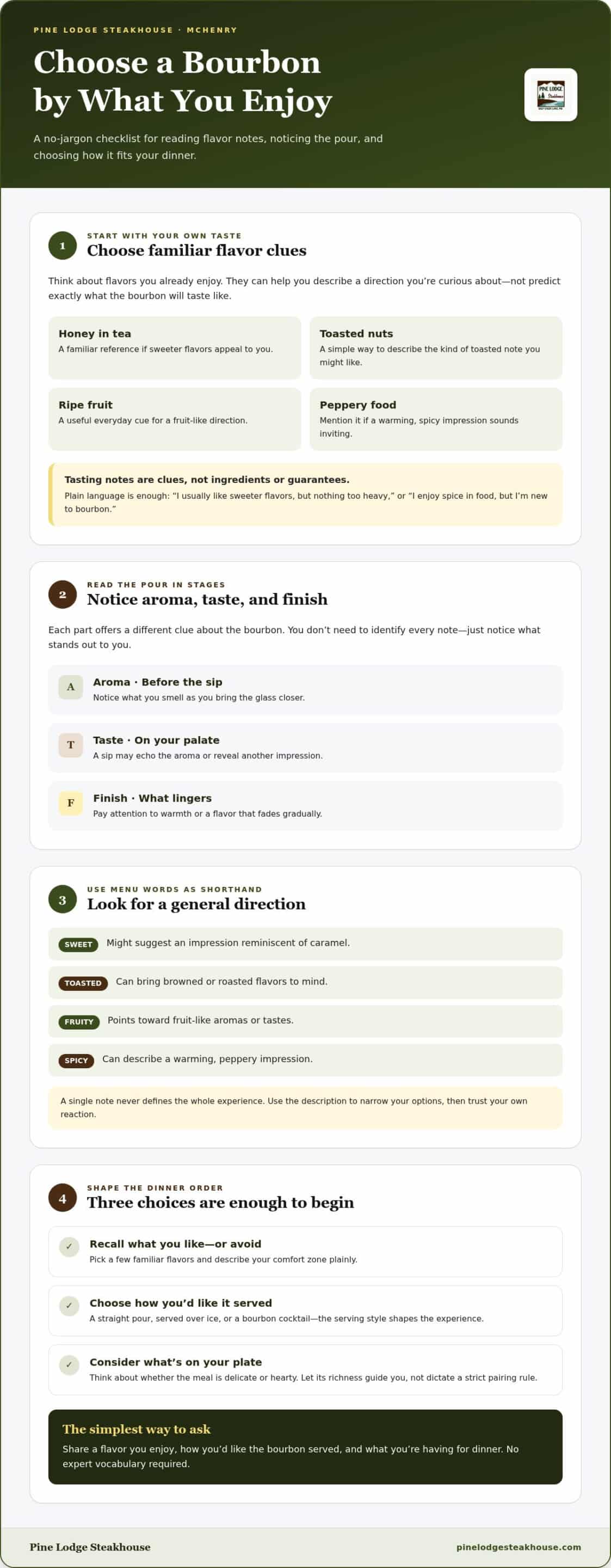
Think about the tastes you gravitate toward. Do you reach for honey in tea, toasted nuts with a snack, ripe fruit for dessert, or a peppery kick in savory food? These everyday preferences can help you describe a direction you’re curious about. They aren’t a promise that bourbon will taste exactly like a particular food or drink.
Tasting notes are descriptions, not ingredient lists or guarantees. Treat familiar words on a menu as clues. You might say, “I usually like sweeter flavors, but nothing too heavy,” or “I enjoy spice in food, but I’m new to bourbon.” Plain language gives the server a clearer sense of your comfort zone than trying to decode every term.
What should a first-time bourbon drinker prioritize?
Choose a direction that sounds inviting, not impressive. A rare or prestigious-sounding pour isn’t automatically right for your palate, and you don’t need to seek out the boldest option to appreciate bourbon. One guest may prefer a gentler, sweeter profile; another may enjoy a warmer, more pronounced flavor. Neither preference is more correct.
Before ordering, follow this short path:
- Recall familiar flavors. Choose a few words that describe what you enjoy, or mention a taste you’d rather avoid.
- Choose a serving style. Decide whether you’re leaning toward a straight pour, one served over ice, or a bourbon cocktail. The serving style shapes the experience, so choose what feels comfortable.
- Consider dinner. Think about whether your meal is delicate or hearty, then use that as one more clue, not a strict pairing rule.
That’s enough to begin. To choose bourbon McHenry steakhouse guests will genuinely enjoy, describe your likes and dislikes plainly, then consider a recommendation that fits your palate and meal. You can build your tasting vocabulary as you go; there’s no need to arrive with it.
Understand Bourbon Flavor Before You Choose a Pour
Bourbon descriptions are useful shorthand, not a checklist of ingredients or a promise that every sip will match a familiar taste. A note such as “fruity” points toward an impression someone might recognize, but it doesn’t tell the whole story or guarantee you’ll experience it the same way. Use menu language to narrow the field, then let your own senses make the final call. For broader background on bourbon and its place in Kentucky’s spirits industry, the Kentucky Distillers’ Association offers additional context.
You don’t need bourbon expertise to choose a pour; you only need to notice what you enjoy. Use a tasting description as a starting point without memorizing technical terms or treating a label as a verdict on whether a bourbon is right for you.
How to read common bourbon tasting notes
Sweet, toasted, fruity, and spicy are broad sensory directions. “Sweet” might suggest an impression reminiscent of caramel; “toasted” can bring to mind browned or roasted flavors; “fruity” suggests fruit-like aromas or tastes; and “spicy” can describe a warming, peppery impression. These words don’t mean those foods were added, and one note never defines the entire tasting experience. Use them as clues, not guarantees.
What do aroma, taste, and finish tell you?
Aroma is the first clue: before sipping, notice what you smell as you bring the glass closer. Taste is what you register on your palate once you take a sip. It may echo the aroma or reveal another impression. The finish is what lingers afterward, such as warmth or a flavor that fades gradually. Each stage offers a different piece of the picture, rather than one definitive answer.
To make menu descriptions more useful, try this simple sequence as you read:
- Pick a note that appeals to you. Start with a word you find inviting instead of trying to interpret every descriptor.
- Look for the overall direction. Notice whether the description emphasizes a softer, sweeter impression or a more toasted, fruity, or spicy one.
- Check your own reaction. Ask yourself whether that direction sounds enjoyable, even if you can’t predict precisely how it will taste.
Keep an open mind. A single descriptor can come across differently depending on the rest of the bourbon’s aroma, taste, and finish. If a description sounds appealing but the first sip surprises you, that’s useful information about your preferences, not a sign you chose incorrectly. This sequence can help you choose bourbon McHenry steakhouse menus offer based on your own impressions, not prestige alone.
Once you have a flavor direction in mind, consider how you’d like the bourbon served and what you plan to eat. As you plan dinner at Pine Lodge Steakhouse, you can make a reservation for your McHenry steakhouse dinner and put your tasting vocabulary to use.
Match Bourbon to Your Steakhouse Dinner Without Overthinking It
A bourbon-and-dinner pairing doesn’t need a rulebook. Let the meal’s overall richness offer one clue, then balance it against the flavors you enjoy. A fuller, more robust direction may appeal alongside a hearty plate, while a gentler profile can leave more room for subtler flavors. Contrast can work, too: a brighter or spicier impression might be just what you want with a rich meal.
Use this comparison as a starting point, not a set of required matches. It offers flavor directions rather than specific bottles, and your preference gets the final say.
| Dinner direction | Flavor direction to consider | How to use the guide |
|---|---|---|
| Lighter meal | Gentler or lightly sweet | Consider a softer direction if you want the food’s flavors to remain prominent. |
| Richer steak | Toasted, warm, or more pronounced | Try a fuller flavor direction if you enjoy a pour with presence, or choose contrast if that appeals more. |
| Varied meal | Balanced or broadly appealing | Choose a direction you’d enjoy across different bites instead of matching one dish alone. |
Choose a flavor direction to complement your meal
Think about the whole plate, not just the name of the cut. Pine Lodge serves hand-cut steaks, and its guide to hand-cut steak cuts can help you explore their differences. A steak’s richness can be one consideration as you decide whether you’d like a softer, sweeter impression or something more assertive. Neither is the “correct” choice. Your enjoyment matters more than following a pairing formula.
For example, if the dish sounds rich and you like bold flavors, you might look toward a more pronounced direction. If you’d rather create contrast, a gentler profile could feel more appealing. A lighter meal doesn’t rule out a fuller pour if that’s what you prefer. The point is to make a considered choice, not let the menu decide for you.
How should the rest of the table influence your choice?
If your meal centers on slow-roasted prime rib, its hearty character may shape the kind of contrast or complement you’re after. Pine Lodge’s slow-roasted prime rib guide offers more context about this steakhouse entrée. If your table includes a mix of dishes, choose a flavor direction you’d enjoy with more than one bite rather than seeking a precise match for each plate.
Keep the decision simple: consider dinner, name the flavor direction that sounds appealing, and leave room for personal taste. To choose bourbon McHenry steakhouse diners can enjoy with a meal, treat richness as a helpful clue, not a strict pairing rule.
Order Bourbon with Confidence: Choose the Serving Style and Ask Clearly
The right serving style is the one that suits how you want to enjoy bourbon with dinner. A straight pour lets you focus on the spirit itself, ice brings a cooler, gradually changing sip, and a cocktail makes bourbon part of a mixed drink. None is the expert’s choice by default. Decide what sounds comfortable, then give your server a little context so a recommendation can reflect your taste and familiarity.
Neat, over ice, or in a cocktail?
Neat means bourbon served without added ice or a mixer, leaving the spirit undiluted in the glass. Over ice starts colder, and as the ice melts, it gradually dilutes the drink, which can change how its flavors come across. A cocktail combines bourbon with other ingredients for a mixed-drink experience. Choose based on what you’d enjoy sipping, not on which option sounds most traditional.
If you’re curious about local bourbon culture, Pine Lodge’s bourbon tasting guide offers broader context. At the table, a simple preference is enough. You might want to sip bourbon on its own, enjoy it over ice, or have it in a cocktail alongside your meal.
A simple way to ask for a recommendation
A useful request has three parts: the flavor direction you like, the serving style you want, and how familiar you are with bourbon. You don’t need formal tasting language. Say what you mean, whether that’s “I prefer something gentle” or “I enjoy a more pronounced flavor.” If you already have a favorite style, mention it; if you’re new to bourbon, say so.
Try this relaxed prompt: “I’m new to bourbon and usually like sweeter, smoother flavors. I’d prefer it over ice. What would you recommend?” Or, if you know your preferences: “I enjoy a spicier flavor and would like to try a bourbon cocktail. What might suit me?” These examples state a preference without requiring you to know a particular label or technical term. Adjust the words to fit what you like, and the server has a clear place to begin.
Keep the order of decisions straightforward:
- State your flavor preference. Name a direction you enjoy or one you’d rather avoid.
- Choose how you want it served. Say neat, over ice, or in a cocktail.
- Request a recommendation. Add whether you’re new to bourbon or already have favorites.
That small amount of detail helps you choose bourbon McHenry steakhouse guests can enjoy on their own terms, without turning the order into a quiz. Ready to settle in for dinner and make your choice at the table? Reserve your Pine Lodge dinner.
Explore Pine Lodge’s Specialty Bourbon Selection in McHenry
After considering your palate, dinner, and preferred serving style, you have a practical way to approach a bourbon menu. Pine Lodge Steakhouse brings that choice into a McHenry setting, pairing a specialty bourbon selection with hand-cut steaks and slow-roasted prime rib. Locally owned and operated since 2002, the restaurant offers a lodge-style place to enjoy dinner near Deep Creek Lake and Wisp Resort.
You don’t need a favorite label or years of tasting experience to enjoy the combination. A straightforward description of what you like, whether you prefer a neat pour, ice, or a cocktail, is enough to begin exploring. Let the evening feel like dinner, not a test: consider the menu, pick a direction that sounds appealing, and stay open to discovering what you enjoy.
A local setting for bourbon and dinner
Pine Lodge Steakhouse features a lodge-style atmosphere that suits a steakhouse meal, whether you’re visiting the Deep Creek Lake area, spending time near Wisp Resort, or dining in McHenry. A specialty bourbon selection is part of the experience, alongside entrées like hand-cut steak and slow-roasted prime rib. Keep the whole table in mind while choosing a pour or cocktail that reflects your own taste.
There’s no need to match a particular pour to a specific cut or choose the most imposing-sounding option. If you enjoy a sweeter direction, say so. If you’d rather have a bold flavor or a mixed drink, describe that instead. Your preferences can guide the choice while the meal and rustic lodge-style setting make the occasion feel complete.
Make your next McHenry dinner reservation
As you plan a meal, keep your bourbon choice simple: think about the flavors you enjoy, decide how you’d like it served, and consider the dinner you’re looking forward to. That gives you a clear starting point without needing to master tasting jargon. At Pine Lodge Steakhouse, you can bring that approach to a steakhouse dinner in McHenry, with a specialty bourbon selection, hand-cut steaks, and slow-roasted prime rib.
If you’re ready to enjoy bourbon with dinner near Deep Creek Lake, reserve a table at Pine Lodge Steakhouse. Come with a flavor preference in mind, or simply be ready to describe what sounds good. Whether you’re a first-time bourbon drinker or already know the styles you favor, choosing can be part of a relaxed evening out.
Bring Your Bourbon Preferences to the Table
Your next bourbon choice doesn’t need to be a grand declaration. Think of it as a chance to try something that suits the evening, whether you order a familiar flavor direction or follow your curiosity toward a new one. To choose bourbon McHenry steakhouse diners will enjoy, trust your own preferences and let the meal unfold at its own pace.
At Pine Lodge Steakhouse, that choice can be part of a relaxed dinner near Deep Creek Lake and Wisp Resort. If you’re ready to plan an evening out, reserve your table at Pine Lodge Steakhouse. Come as you are, share what sounds good, and enjoy discovering a pour that feels right for you.
Frequently Asked Questions
Is bourbon always made in Kentucky?
No. Kentucky is strongly associated with bourbon, but the spirit can be made elsewhere in the United States if it meets the applicable standards for the bourbon category. “Bourbon” describes a type of spirit, while a state-of-origin label identifies where it was produced. Those terms answer different questions, so a bourbon made outside Kentucky can still qualify as bourbon.
Can beginners enjoy bourbon if they do not know tasting notes?
Absolutely. Tasting vocabulary is optional, not a prerequisite for enjoying a drink. Start with something familiar, such as preferring softer flavors or avoiding a strong, lingering finish. Notice the aroma and first sip, then describe your impression in everyday words. If you’re deciding how to choose bourbon McHenry steakhouse menus offer, a server can help guide you from those simple preferences.
What does bourbon proof mean?
Proof is a measure of a spirit’s alcoholic strength. A higher-proof bourbon may come across as more intense, which can affect how comfortable it feels to sip, but that doesn’t make it better quality. If you’re unsure what suits you, mention that you’d prefer something less forceful or that you’re still learning your comfort level. Choose a pour that feels right for you, and sip at your own pace.
Does bourbon have to taste sweet?
No. Bourbon may have sweet-seeming notes, but its overall character can also bring toasted, fruity, or spicy impressions. Tasting descriptions are broad guides, not guarantees that a particular pour will taste one way to everyone. If you generally avoid sweetness, say so when ordering and ask for a flavor direction that sounds more suitable. You can describe what you dislike without needing a technical term for it.
Can you enjoy bourbon in a cocktail instead of drinking it neat?
Yes. Bourbon can be enjoyed in a mixed drink, and choosing a cocktail is a preference, not a beginner’s compromise. Mixers and other ingredients shape the drink’s overall character, potentially adding flavors or changing its balance compared with bourbon served on its own. If you prefer something less spirit-forward or enjoy a particular flavor direction, tell your server what sounds appealing and ask for guidance.
What should I do if I do not enjoy the first bourbon I try?
One pour doesn’t have to define your opinion of every bourbon. Consider what didn’t suit you: perhaps the flavor seemed too sweet, the intensity felt strong, or the serving style wasn’t comfortable. That observation can help you make a different choice on another occasion. You might describe what you’d change, such as wanting a milder impression or a mixed drink, and use that as a fresh starting point.
Is bourbon a good choice with dinner if I prefer a lighter drink?
It can be, but your dinner should suit your preferences, not the other way around. If a bourbon pour sounds too strong or heavy for the evening, you can choose a cocktail or another beverage that feels more comfortable. Think about what you’d enjoy alongside your meal, and order accordingly. A steakhouse dinner can be satisfying with or without bourbon, so there’s no need to force the pairing.