
What if the best pour isn’t the sweeter one or the spicier one, but the whiskey that suits your dinner and your taste? If bourbon and rye sound similar on the menu, you’re not alone. This bourbon vs rye McHenry guide starts with the simple distinction: bourbon gets most of its grain from corn, while rye whiskey gets most from rye. That difference helps shape what you taste, without making either style the “right” choice.
At Pine Lodge Steakhouse, a locally owned McHenry dining destination, a specialty bourbon selection sits alongside hand-cut steaks and slow-roasted prime rib. Whether you’re settling in for a hearty meal or curious about whiskey, a few flavor cues can make choosing easier. We’ll explain the grain difference and what serving style and dinner can bring to the experience. No bottle expertise required, just a sense of whether you’re in the mood for a rounder, sweeter sip or a livelier, spicier one.
Key Takeaways
- In bourbon vs rye McHenry, the key distinction is the grain that leads the mash: corn for bourbon and rye for rye whiskey.
- Bourbon often leans sweeter and rounder, while rye can bring spicier notes, though individual bottles vary.
- Grain, barrel aging, and proof all shape a whiskey’s character, so the category name is only part of the story.
- Choose a flavor direction, consider your steak or prime rib dinner, then decide whether you’d enjoy your pour neat or in a cocktail.
- Pine Lodge Steakhouse pairs a lodge-style dinner setting with a specialty bourbon selection in McHenry, near Deep Creek Lake.
Bourbon vs. Rye: What Is the Difference?
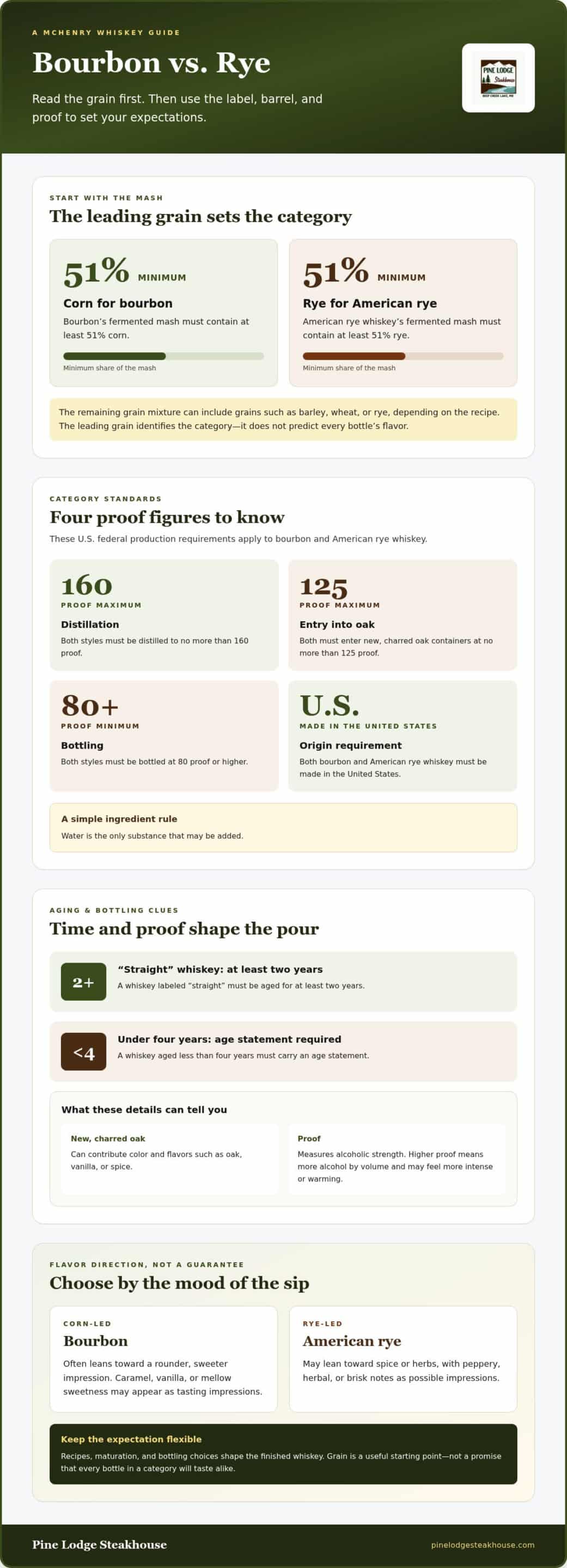
The main difference between bourbon and rye whiskey is the grain used in the mash, the mixture fermented and distilled to make the spirit. Bourbon must be made with a mash containing at least 51% corn, while American rye whiskey must contain at least 51% rye. That dominant grain gives each style its identity, though it doesn’t dictate exactly how every bottle will taste.
Quotable definition: Bourbon is American whiskey made from a mash that is at least 51% corn; American rye whiskey is made from a mash that is at least 51% rye.
The rest of the grain mixture can include grains such as barley, wheat, or rye, depending on the recipe. Maturation and bottling choices also influence the finished whiskey, from its aroma and texture to its balance of sweetness, spice, and warmth. The grain distinction is a useful starting point, not a promise that every bourbon or rye will taste alike. The general overview of Rye Whiskey offers more background on the style and its distinction from bourbon.
What makes a whiskey bourbon?
Under current U.S. federal standards, bourbon’s fermented mash must contain at least 51% corn, and the whiskey must be produced in the United States to use the bourbon designation. Bourbon is one American whiskey category, not another word for whiskey as a whole. A glass may suggest caramel, vanilla, or mellow sweetness, but those are common impressions, not guaranteed tasting notes. The other grains, maturation, and bottling can shift the result.
What makes a whiskey rye?
American rye whiskey must have at least 51% rye in its fermented mash under U.S. federal standards. Rye can also appear in a bourbon recipe alongside corn, but that doesn’t make the finished whiskey rye. Rye whiskey is defined by rye meeting its required share. Peppery, herbal, or brisk notes are possible tasting impressions, not rules for every bottle.
That distinction helps make labels easier to understand without turning the choice into a technical test. Think of the grain requirement as the foundation, then let the whiskey’s own character fill in the details. Two bottles in the same category can differ because their recipes and maturation aren’t necessarily identical, and proof can affect how bold or warming a sip feels. Taste descriptions are clues rather than guarantees.
For anyone weighing bourbon vs rye McHenry, the practical takeaway is simple: start with the dominant grain, then stay open to the individual bottle. Bourbon’s corn-led mash often points toward a rounder, sweeter impression; rye’s rye-led mash may lean more toward spice or herbs. Neither style is automatically better, and those tendencies won’t describe every pour. Knowing the distinction gives you a confident starting point for choosing a whiskey to enjoy with dinner.
How Grain, Aging, and Proof Shape Bourbon and Rye
Grain gives whiskey its starting point, but the law also sets production standards for each category. For bourbon, U.S. federal rules require a mash bill of at least 51% corn. American rye whiskey must contain at least 51% rye. Both must be made in the United States, distilled to no more than 160 proof, and entered into new, charred oak containers at no more than 125 proof. They must be bottled at 80 proof or higher, and water is the only substance that may be added.
Those requirements define the categories; they don’t guarantee a particular flavor. A legal standard tells you what a whiskey must meet to carry its name. Tasting notes describe what someone may notice in a particular bottle. Keeping those ideas separate makes labels easier to understand and flavor expectations more flexible.
What the mash bill tells you
A mash bill is the combination of grains used to make a whiskey before fermentation. A corn-forward bourbon recipe may suggest a softer, sweeter starting impression, while a rye-forward whiskey may point toward a brisker, spicier one. Other grains can also add complexity. The label category tells you the leading grain, not every detail of the recipe.
Grain alone can’t predict every bottle’s taste, because the recipe, maturation, and bottling choices all shape the finished whiskey. That’s why two whiskeys in the same category may come across differently in the glass, even when both meet the same basic grain requirement.
Why barrels and bottling still matter
New charred oak containers can contribute color and flavors such as oak, vanilla, or spice as whiskey matures. The character drawn from a barrel can vary, so the shared requirement doesn’t mean every bourbon or rye develops identical color or tasting notes. Time matters, too: a whiskey labeled “straight” must be aged for at least two years, and one aged less than four years must carry an age statement.
Bottling strength adds another cue. Proof measures alcoholic strength, with higher proof indicating more alcohol by volume. A stronger whiskey may feel more intense or warming, but that doesn’t make it better. One person may prefer a lower-proof pour, while another enjoys a bolder sip. Aging duration and bottling strength vary across labels, so tasting notes are guidance, not a promise that every glass will taste alike.
For bourbon vs rye McHenry, these details offer a practical way to read a label without turning dinner into a lesson in regulations. Start with the grain, then consider how oak and proof might shape the experience. To enjoy a bourbon with a meal in a welcoming lodge-style setting, plan a dinner at Pine Lodge.
Bourbon vs. Rye Flavor: Which Style Fits Your Taste?
Once you know the grain distinction, let your palate guide the choice. In the bourbon vs rye McHenry comparison, flavor descriptions are signposts, not guarantees: recipes, aging, and bottling can make individual whiskeys taste quite different, even within the same category. Use the guide below to decide which direction sounds appealing, while leaving room for a surprise.
| Style | Grain emphasis | Common flavor cues | Possible first-pour appeal |
|---|---|---|---|
| Bourbon | Corn | Sweet, rounded, caramel-like, or oak-led | A good starting direction if you enjoy richer, sweeter impressions |
| Rye whiskey | Rye | Peppery, herbal, bright, or spicy | A good starting direction if you like a more pronounced spice impression |
These are broad tendencies, not tasting promises. A particular bourbon may show more oak than sweetness, while a rye may feel lively without overwhelming the palate. Your own experience also depends on what flavors you enjoy and how the whiskey is served.
When bourbon may suit your palate
If caramel-like sweetness, a rounded feel, or oak-forward notes sound inviting, bourbon may be a comfortable place to begin. Those impressions can complement a hearty dinner, but they aren’t assured in every bottle. Bourbon isn’t automatically mild, smooth, or low in alcohol. Expect variation and choose by the flavor cues that appeal to you, not by the category name alone.
When rye may suit your palate
If you gravitate toward peppery seasoning, herbal aromas, or a brighter edge, rye could be worth exploring. The style can bring a pronounced spice impression, though it won’t always be sharp or intense. Rye varies in sweetness, body, and strength from bottle to bottle, so it may feel rounded or balanced rather than purely spicy.
One word can muddy the choice: smooth. It’s a personal description, often used for a sip that feels easy or balanced, not a reliable label for bourbon or rye. Either style may taste smooth to one person and bold to another. Strength, texture, sweetness, spice, and serving style can all shape that impression.
Try this simple rule: begin with the flavor direction you already like. Prefer a sweeter, richer impression? Start with bourbon. Enjoy spice or herbal notes? Consider rye. Then stay open-minded. A first sip may reveal a flavor you didn’t expect, and your preferences can shift alongside a meal. Use the table as a starting point, not a scorecard that ranks one whiskey above the other.
How to Choose a First Pour with Dinner in McHenry
A first whiskey with dinner doesn’t need to feel like a test. For bourbon vs rye McHenry, let your preferences lead: think about the flavors you enjoy, the character of your meal, and how you’d like to sip. These three steps make the choice approachable, whether you’re settling in for a hand-cut steak or slow-roasted prime rib.
- Choose a flavor direction. If you’re drawn to a richer, sweeter impression, bourbon may be a natural place to start. If you enjoy a pronounced spice or herbal note, rye may sound appealing. Treat those descriptions as broad clues, not a guarantee of what any individual whiskey will taste like.
- Consider your meal. Think about the flavors on your plate and what you’d like beside them. A richer bourbon profile might appeal alongside a bold meal; rye’s spice could offer an interesting counterpoint to savory flavors. These are personal experiments, not fixed pairings. For a closer look at how steak is prepared, explore this hand-cut steak guide.
- Choose a serving style. Decide whether you’d like to taste whiskey on its own, over ice, or in a cocktail. The format changes the experience, so choose what sounds comfortable for this meal.
Let the meal guide your flavor choice
Picture the kind of dinner you’re looking forward to. With a hearty steak or prime rib, you might enjoy how a whiskey’s sweetness, oak, or spice feels alongside the savory richness of the meal. There’s no single correct combination. Your palate matters most, and a flavor that contrasts with dinner can be just as enjoyable as one that echoes it. Treat pairing as curiosity, not a rule.
Choose a serving style that feels comfortable
A neat pour lets you notice the whiskey’s aroma and taste without added water or ice. Ice chills the drink and gradually dilutes it as it melts, which can soften or shift its flavors. A cocktail offers another route, with other ingredients shaping the overall taste. None is the “proper” way to enjoy a pour; pick the style that suits your mood and meal.
At Pine Lodge Steakhouse, the specialty bourbon selection and lodge-style dinner setting make a welcoming backdrop for enjoying bourbon with a meal in McHenry. Start with flavors you like, then see how they work with dinner. Plan your dinner at Pine Lodge and settle in for a relaxed evening.
Enjoy a Specialty Bourbon Pour at Pine Lodge Steakhouse
Understanding the difference between bourbon and rye can make choosing a whiskey feel less like guesswork and more like part of enjoying dinner. In McHenry, Pine Lodge Steakhouse brings that choice into a relaxed dining context, with a specialty bourbon selection and a lodge-style setting. The focus is on enjoying bourbon with dinner.
A relaxed whiskey-and-dinner setting near Deep Creek Lake
For visitors spending time around Deep Creek Lake and Wisp Resort, Pine Lodge offers a McHenry dinner destination where bourbon can accompany a meal. Hand-cut steaks and slow-roasted prime rib give you familiar dishes to consider alongside a pour. You might enjoy exploring how bourbon feels with dinner, but personal preference matters more than any promised pairing. Let the food and your palate guide the experience.
If you’re still getting comfortable with whiskey terms, keep the basics in mind: grain points to a style, while the individual whiskey and the way it’s served shape what you notice. Pine Lodge’s specialty bourbon selection gives you a chance to explore bourbon in a dinner setting without needing a favorite bottle or detailed tasting vocabulary. Start with the flavor cues that sound appealing, then enjoy the choice at your own pace.
For more local context on exploring bourbon, Pine Lodge’s McHenry bourbon tasting and specialty bourbon bar guide offers another perspective. Use it alongside the grain and flavor comparison, not as a reason to treat one style as superior. The best choice is the one that suits your taste and the dinner you’re looking forward to.
Plan a table for your McHenry dinner
A meal at Pine Lodge can be a comfortable occasion to explore your bourbon preferences, whether you’re curious about a sweeter, rounder impression or simply want to enjoy a well-prepared dinner with whiskey. Choose what appeals to you, and let the evening be about good food and a relaxed pour.
Ready to enjoy dinner in McHenry? Make a reservation at Pine Lodge Steakhouse and settle in for a meal with a specialty bourbon selection close to Deep Creek Lake.
Make Your Next Pour Part of the Evening
Your next whiskey choice doesn’t have to settle the bourbon-versus-rye question for good. Notice what you enjoy: a sweeter note, a lively hint of spice, or simply the way a particular pour fits the moment. That’s the heart of bourbon vs rye McHenry: choosing with curiosity rather than worrying about getting it right.
Give yourself room to explore at the table. A relaxed dinner can turn a first sip into a new favorite, especially when you’re open to how your preferences change from one meal or serving style to another. At Pine Lodge Steakhouse, enjoy a welcoming McHenry dining experience and explore the specialty bourbon selection alongside dinner.
Reserve a table at Pine Lodge Steakhouse and make your next evening out a chance to enjoy good food and find a pour that feels right for you. Here’s to a welcoming table and more confidence in your next choice.
Frequently Asked Questions
Is bourbon always sweeter than rye?
No. Bourbon often gives an impression of sweetness, but that isn’t true of every bottle, and rye isn’t automatically dry or sharply spicy. Notice separate elements in a sip: sweetness, oak, spice, and warmth. A whiskey might show one clearly and another only in the finish. Your palate matters, too, so tasting the same pour with and without food can change which notes stand out.
Can bourbon be made outside Kentucky?
Yes. Bourbon can be made anywhere in the United States, provided it meets the federal requirements for the category. Kentucky has a strong bourbon tradition, but the state isn’t a requirement for the name. If a label lists another U.S. state, that alone doesn’t make the whiskey less of a bourbon. The useful distinction is whether it meets the category’s production rules, not whether it comes from Kentucky.
Is rye whiskey made only from rye grain?
No. American rye whiskey isn’t necessarily made entirely from rye. Its mash can include other grains, as long as rye makes up at least 51% of the grain mixture under U.S. federal standards. For example, a rye whiskey may also use corn or malted barley. The word “rye” identifies the leading grain required for the category, not an ingredient list consisting of rye alone.
Can you drink bourbon or rye over ice?
Yes. Ice is a perfectly reasonable way to enjoy either style. As it melts, it chills and dilutes the whiskey, which may soften some sensations or bring different aromas forward. If you’re curious about a pour’s character, taste a small sip before adding ice, then compare it after the drink has chilled. There’s no single correct serving method; choose what you enjoy with your meal.
What does high-rye bourbon mean?
High-rye bourbon is a common description for bourbon whose recipe uses a more prominent share of rye as a secondary grain than some other bourbon recipes. It still has to meet the bourbon category’s corn requirement. The phrase can hint at a livelier spice character, but it doesn’t guarantee a specific flavor or intensity. Treat it as a clue about the recipe, not a precise tasting promise.
Does bourbon pair well with steak?
It can, though the result depends on your taste and the meal. A bourbon’s fuller or sweeter notes may feel at home alongside a savory steak, while another diner may prefer to sip it separately between bites. For bourbon vs rye McHenry, think of pairing as a personal experiment, not a rule. Pine Lodge Steakhouse in McHenry, near Deep Creek Lake, serves hand-cut steaks alongside its specialty bourbon selection.
Is rye whiskey stronger than bourbon?
Not automatically. “Rye” and “bourbon” describe whiskey categories, not a fixed alcoholic strength. Bottles in either category can have different proofs, so compare the proof or alcohol-by-volume statement on the label rather than guessing from the grain name. If a whiskey feels intense, try a smaller sip or a little ice and notice how the experience changes. Higher strength isn’t a measure of quality.