
Most diners believe a steak is just a steak until they’re served a thin, machine-cut slab that lacks the soul of a true mountain meal. You’ve likely felt that sting of disappointment when a premium price tag doesn’t match the marbling, the preparation, or the atmosphere of the room. It’s frustrating to navigate confusing menu terms or settle for generic chain restaurants when you’re craving a meal that feels like a celebration of the local landscape. We agree that a trip to the mountains deserves a culinary centerpiece that’s as impressive as the scenery itself.
This guide ensures you never settle for an average dinner again by showing you exactly how to find the best ribeye steak Deep Creek Lake provides in 2026. You’ll discover the secrets behind hand-cut precision, from the buttery richness of the spinalis dorsi to the impact of evolving USDA grading standards on your plate. We will preview the essential elements of a connoisseur’s experience, including why a 16 oz. Cowboy Ribeye paired with a specialty bourbon and a crackling stone fireplace creates the ultimate lodge-style dining retreat. Get ready to understand the true value of a masterfully grilled steak in a setting that’s built on tradition and hospitality.
Key Takeaways
- Learn why the ribeye is the gold standard for mountain dining, offering a superior balance of rich intramuscular marbling and tender texture.
- Understand the critical difference between machine-processed cuts and a hand-cut ribeye steak Deep Creek Lake enthusiasts prefer for precision and flavor.
- Master the art of ordering by discovering why medium-rare to medium temperatures are essential for properly rendering the fat in a highly marbled cut.
- Elevate your meal with curated pairing advice, matching your steak with specialty bourbons and the cozy, fireplace-lit atmosphere of a local landmark.
Why Ribeye is the Definitive Steak Choice for a Deep Creek Lake Getaway
When the mountain air turns crisp and the sun dips behind the ridges of McHenry, your appetite naturally shifts toward something substantial. A vacation at the lake isn’t just about the water or the slopes; it’s about the rituals that follow a day of adventure. For many, the ultimate reward is a perfectly seared ribeye steak Deep Creek Lake visitors recognize as the gold standard of mountain dining. It represents a destination dining experience where the quality of the meal matches the grandeur of the surroundings near Wisp Resort. This isn’t just a meal; it’s a sensory event that begins the moment the aroma of woodsmoke and searing beef hits the air.
The Flavor Profile: Why Marbling Matters
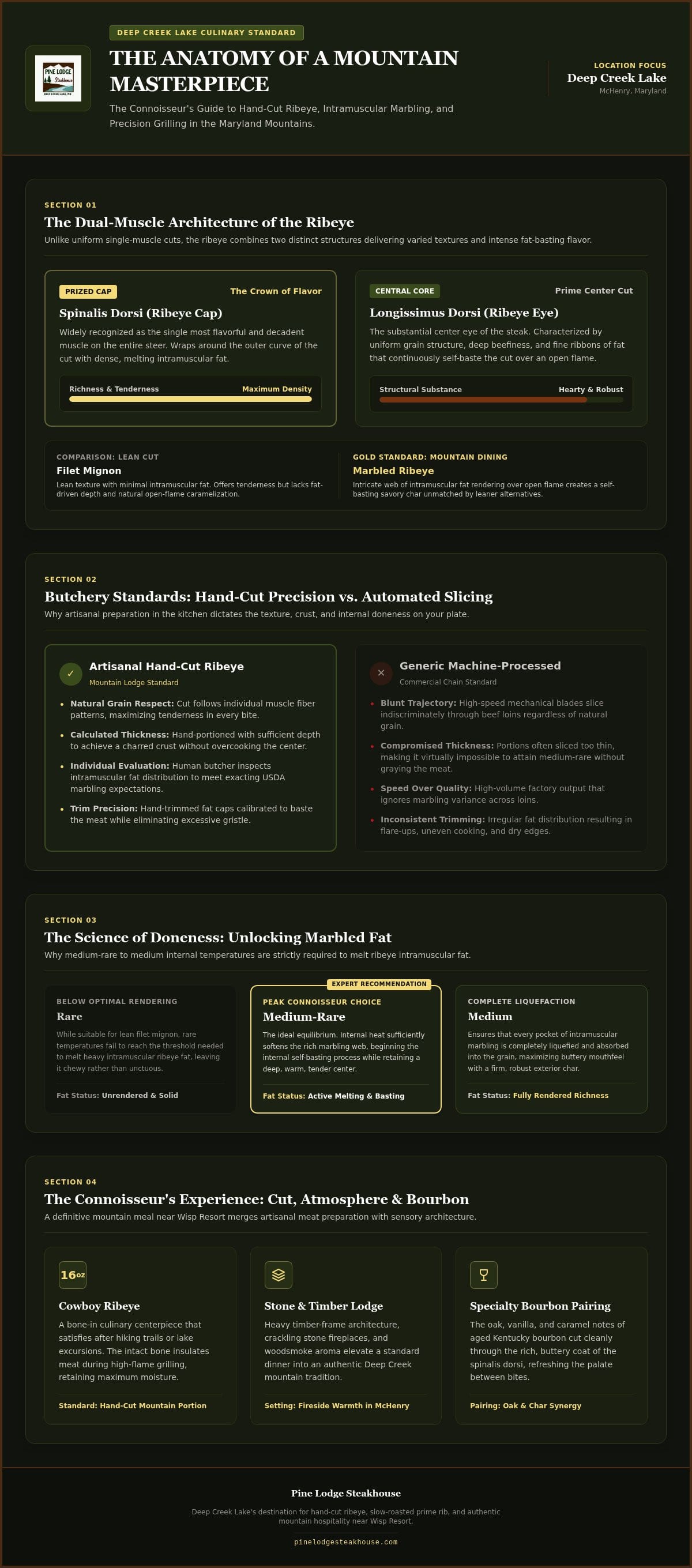
The secret to the ribeye’s dominance lies in its intricate anatomy. This specific ribeye cut is prized for its high level of intramuscular fat, commonly known as marbling. Unlike a leaner filet mignon, which offers tenderness but less fat-driven flavor, the ribeye features a rich web of fat that melts during the grilling process. This creates a self-basting effect that results in a buttery, robust flavor profile that other cuts simply can’t replicate. When grilled over an open flame, these fats render and caramelize, producing a savory char that satisfies the most discerning flavor-first diner. The combination of the longissimus dorsi and the prized spinalis dorsi ensures every bite offers a different, decadent texture.
Setting the Scene: Dining in the Maryland Mountains
A premium steak tastes different when you’re surrounded by the warmth of a rustic lodge. The sensory experience of a ribeye is amplified by the physical environment of the Maryland mountains. Timber-frame architecture, heavy stone accents, and the steady glow of multiple fireplaces create an atmosphere where you feel invited to linger. This setting transforms a standard dinner into a celebratory event, grounding the meal in the traditional hospitality of the region. Large groups and families often gravitate toward these spaces because they provide a sense of place that generic chain restaurants lack. A true lodge-style experience is a curated blend of physical comfort and culinary excellence that makes every guest feel like a priority.
Whether you’ve spent the day hiking the trails or docking your boat at the lake, a hand-cut ribeye provides the hearty sustenance required for a mountain getaway. It’s a meal that feels both classic and indulgent, mirroring the timeless appeal of Deep Creek Lake itself. Choosing a ribeye steak Deep Creek Lake locals recommend ensures you’re participating in a local tradition of quality and craftsmanship. If your travels take you beyond the mountains to the heart of the Cotswolds, you can visit Amore Mio to discover a similar devotion to traditional meat and pasta dishes.
The Anatomy of Excellence: Marbling, Aging, and the Hand-Cut Difference
The technical side of a great meal often goes unnoticed, but it’s the foundation of every bite. When you order a ribeye steak Deep Creek Lake visitors rave about, you’re tasting the result of specific butchery decisions made before the heat ever touches the meat. Most generic restaurants rely on machine-cut portions that prioritize speed over quality. These automated blades don’t respect the natural variation in a beef loin; they simply slice through it. In contrast, the “Art of the Cut” involves a human eye and a steady hand to evaluate each individual piece of beef. This personalized approach ensures the final plate presentation is as impressive as the flavor itself.
Why We Insist on Hand-Cutting Every Ribeye
Precision is the primary reason for this labor-intensive approach. A seasoned butcher follows the natural grain of the meat, ensuring that every slice is optimized for tenderness. Hand-cutting allows for meticulous control over the fat caps and the overall thickness of the steak. If a machine cuts a steak too thin, it’s impossible to achieve a perfect medium-rare center without overcooking the exterior. By hand-cutting, we ensure a uniform, high-quality experience that respects the premium nature of the meat. You can explore more about the benefits of hand-cut steaks to see how this craftsmanship extends to other signature offerings.
Quality also depends on the raw material itself. We look for specific levels of intramuscular fat that align with USDA beef grading standards to guarantee the juiciness our guests expect. Before the steak hits the grill, it must reach a consistent temperature. Throwing a cold steak onto a hot surface leads to uneven cooking; taking the time to temper the meat is a small but vital step in the process.
From Prep to Plate: The Seasoning and Grilling Process
We believe in simple, high-quality seasoning that highlights the natural beef flavor rather than masking it. Once seasoned, the steak meets the high-heat grill to trigger the Maillard reaction. This chemical process creates that essential savory crust on the outside while locking in the juices. It’s a delicate balance of temperature and timing that requires constant attention from the chef.
Patience remains the final ingredient. Every ribeye needs a resting period after leaving the grill. This allows the meat fibers to relax and the juices to redistribute throughout the cut. If you cut into a steak too early, the moisture escapes onto the plate. Experiencing a hand-cut ribeye steak Deep Creek Lake style means appreciating every step of this methodical process. If you’re ready to see how this technical precision translates to the plate, you might want to book a table for your next visit.
Choosing Your Cut: The Ribeye Comparison Guide
Selecting the right cut is the most critical decision a diner makes after deciding on a ribeye steak Deep Creek Lake getaway centerpiece. While the base muscle remains the same, the presentation and presence of the bone significantly alter the dining experience. You must weigh the primal satisfaction and flavor depth of a bone-in cut against the streamlined, uniform ease of a boneless portion. This choice often defines the rhythm of your evening, whether you’re looking for a quick, high-quality bite or a lingering, multi-course mountain feast. Understanding these nuances helps you navigate a menu with the confidence of a true connoisseur.
Bone-In vs. Boneless: Which Wins for Flavor?
The bone-in ribeye, often called a “Cowboy Ribeye” in traditional butchery, is the preferred choice for those seeking maximum flavor intensity. There is a scientific reason for this: the bone acts as an insulator, slowing the cooking process of the meat immediately surrounding it. This results in a more tender, succulent texture near the bone that many enthusiasts find irresistible. Beyond the science, a bone-in steak fits the aesthetic of a rustic lodge perfectly. It feels substantial and rooted in tradition. However, a boneless ribeye offers a more consistent sear across the entire surface area and is far more practical for a relaxed meal. Both options deliver the signature marbling that makes this cut famous regardless of the final presentation.
Weight and Thickness: Finding Your Perfect Portion
Portion sizes in the mountains tend to be generous, reflecting the hearty appetites of those who spend their days exploring the trails and waters of Deep Creek Lake. A standard hand-cut ribeye usually starts around 12 to 14 ounces, while a signature Cowboy Ribeye often reaches 16 ounces. Thickness is just as important as weight when it hits the grill. A thicker steak allows the chef more room to develop a deep, savory crust without overcooking the center. If you prefer your steak rare or medium-rare, always opt for the thicker cut. This ensures the internal temperature stays cool and red while the exterior achieves the perfect char.
Mountain steakhouses are legendary for their “Big-As-Your-Face” portions, including massive 24 oz porterhouses and thick-cut ribeyes that serve as the ultimate post-ski reward. Finding your perfect portion means balancing your hunger with the desire for that ideal, edge-to-edge pink center. Whether you choose the 16 oz boneless Cowboy Ribeye for its marbled richness or a standard cut for its manageable size, the quality of the hand-cut preparation remains the most important factor in your satisfaction.
Ordering Like a Pro: Doneness, Pairings, and the Perfect Bourbon
Achieving the perfect meal requires a few final, informed decisions to ensure the craftsmanship in the kitchen translates perfectly to your palate. When you sit down for a ribeye steak Deep Creek Lake experience, you’re managing a cut defined by its richness. Unlike a lean filet, which often shines at rare temperatures, the ribeye demands a specific approach to heat and pairing to truly unlock its potential. These choices are the final steps in a journey that began with expert butchery and ends with a celebratory mountain feast.
The Doneness Debate: Medium-Rare or Medium?
Most steak enthusiasts instinctively order medium-rare, but the ribeye presents a unique case for considering a slightly higher temperature. Because this cut is so heavily marbled, the intramuscular fat needs sufficient heat to render into the meat. If served too rare, the fat remains solid and waxy, depriving you of the buttery texture that defines the cut. A true medium doneness allows those white flecks of fat to liquefy, basting the muscle fibers from the inside out. Visually, you’ll see a warm, pink center rather than a cool, red one. Communicating this preference clearly to your server ensures the kitchen can time the grill perfectly to melt that signature marbling without drying out the muscle.
Bourbon Pairings: The Ultimate Mountain Duo
The bold flavors of a grilled ribeye find their perfect match in the complex profile of a fine whiskey. Navigating a specialty bourbon bar allows you to tailor the drink to your specific steak preparation. Bourbon’s natural notes of caramel, vanilla, and charred oak mirror the savory crust on the steak. If you prefer a spicy, assertive pairing, a High Rye bourbon provides the necessary “bite” to cut through the ribeye’s fat. For those who enjoy a smoother, sweeter finish, a Wheated bourbon complements the beef’s natural richness without overpowering it.
Consider visiting during happy hour options to explore different flavor profiles before your main course arrives. To balance the plate, we suggest sides that offer a crisp, acidic contrast. Fresh grilled asparagus or a house salad with a vinaigrette act as palate cleansers, preventing the richness of the beef from becoming overwhelming. These thoughtful choices transform a simple dinner into a masterclass in mountain dining. If you’re ready to put these tips to the test and enjoy a masterfully paired meal, you can make your reservation today.
Experience the Signature Ribeye at Pine Lodge Steakhouse
After exploring the technical nuances of the cut and the science of the perfect pairing, it’s time to bring those elements together in a setting that honors the craft. Finding the ultimate ribeye steak Deep Creek Lake offers means visiting a place where tradition is served on every plate. Since 2002, Pine Lodge Steakhouse has anchored the McHenry dining scene, offering a space where local pride meets culinary excellence. It’s a destination where the history of the area is as palpable as the aroma of the grill, providing a reliable sanctuary for flavor seekers and vacationers alike.
The Pine Lodge Atmosphere: More Than a Meal
The physical environment is a critical component of the mountain dining experience. Coming in from the crisp air or the slopes at Wisp Resort to find yourself greeted by the steady glow of multiple stone fireplaces is a ritual many visitors cherish. The lodge-style architecture, with its heavy timber frames and warm, inviting lighting, completes the mountain vacation vibe perfectly. It’s an atmosphere that manages to be both upscale and deeply approachable, ensuring every guest feels like an invited friend. This unpretentious hospitality is why we’ve remained a community staple for over twenty years, providing a sense of comfort that generic chain restaurants simply cannot replicate.
Beyond the Ribeye: Completing Your Dinner
While the hand-cut ribeye is often the centerpiece, a complete dinner involves exploring the full depth of a well-curated menu. Many guests begin their evening with our famous creamy crab soup, rich with jumbo lump Maryland crab, or our savory Prime Rib Bites. These starters set the stage for the main event, allowing you to linger over the conversation and the scenery. To elevate the experience, our bar program features an extensive specialty bourbon selection and hand-crafted cocktails designed to complement the rich, marbled flavors of our steaks. This commitment to quality across every category is a testament to the independent, locally-owned spirit that has defined us since Jonathan and Kathy Kessler first opened the doors.
Whether you’re planning a celebratory anniversary or looking for the best in family dining, the experience is designed to be both memorable and celebratory. Every hand-cut ribeye steak Deep Creek Lake visitors enjoy at our tables is a tribute to the art of hospitality and the beauty of the Maryland mountains. We invite you to join us by the fire and discover why we continue to be recognized as a local landmark. To ensure your spot at the table during your next getaway, we recommend you make a reservation for your quintessential mountain dinner today.
Plan Your Ultimate Mountain Dining Experience
A truly exceptional meal is the cornerstone of any getaway. You now have the connoisseur’s toolkit to identify the rich marbling and hand-cut precision that separate an average dinner from a world-class event. By understanding the science of doneness and the art of bourbon pairings, you can navigate any menu with confidence. Finding the most flavorful ribeye steak Deep Creek Lake offers isn’t just about the meat; it’s about the intersection of culinary craftsmanship and the welcoming spirit of the Maryland mountains.
As you prepare for your next visit to McHenry, remember that the best experiences are rooted in tradition and local pride. We invite you to step inside our rustic lodge, where multiple fireplaces create a cozy retreat and our team prepares hand-cut steaks daily with expert care. Voted Garrett County’s Best Steakhouse, we are ready to host your next celebration or relaxed family evening. The perfect sear and a warm, inviting atmosphere are waiting for you just minutes from the water. Book Your Table at Pine Lodge Steakhouse and discover why our hospitality has remained a local landmark for over twenty years. We look forward to seeing you by the fire soon.
Frequently Asked Questions
What is the best way to cook a ribeye for maximum flavor?
The best way to cook a ribeye for maximum flavor is high-heat grilling that triggers the Maillard reaction to create a savory crust. We recommend tempering the meat to room temperature before it hits the flame to ensure even cooking. Aim for a medium-rare to medium doneness to allow the intramuscular fat to render properly. Always let the steak rest for at least five minutes after grilling to lock in the juices.
Is a bone-in ribeye better than a boneless one?
Choosing between bone-in and boneless depends on your priority for flavor intensity versus convenience. A bone-in ribeye, often called a Cowboy cut, benefits from bone-conduction heat that keeps the meat near the bone more succulent and tender. It also provides a rustic aesthetic that fits the mountain lodge vibe. A boneless ribeye offers a more uniform sear across the surface and is often easier to navigate during a relaxed, multi-course dinner.
What are the best sides to pair with a ribeye steak?
The best sides for a rich ribeye are those that offer a crisp or acidic contrast to the beef’s marbling. Grilled asparagus or a fresh house salad with vinaigrette act as excellent palate cleansers during your meal. For a truly local experience, start with our signature creamy crab soup or prime rib bites. Hearty options like loaded baked potatoes or Jacked-Up Mac ‘n Cheese also complement the robust nature of a hand-cut steak perfectly.
How do I know if my ribeye is high quality?
High-quality beef is primarily identified by the level of intramuscular fat, or marbling, visible within the cut. These white flecks of fat melt during cooking to provide moisture and a buttery flavor profile. When looking for a premium ribeye steak Deep Creek Lake enthusiasts can trust, check for USDA Prime or Choice certifications. A high-quality steak should also be hand-cut rather than machine-processed to ensure the grain and thickness are respected for optimal grilling results.
What makes a steakhouse ‘hand-cut’?
A steakhouse is considered ‘hand-cut’ when a trained butcher portions each steak by hand rather than using an automated machine. This manual process allows for better control over the fat caps and ensures each slice follows the natural grain of the meat. Machine-cut steaks are often too thin or uneven, which makes achieving a perfect medium-rare difficult. Hand-cutting is a mark of craftsmanship that guarantees a more consistent and premium dining experience for every guest.
Can I find family-friendly steak dining near Wisp Resort?
You can certainly find family-friendly steak dining near Wisp Resort at Pine Lodge Steakhouse in McHenry. We offer a dedicated kids menu and a welcoming, unpretentious atmosphere that is perfect for families searching for the best ribeye steak Deep Creek Lake has to offer. Our rustic lodge environment features multiple fireplaces that provide a cozy setting for all ages. It’s a community staple where children and adults alike can enjoy a high-quality, celebratory meal.
What bourbon goes best with a marbled ribeye steak?
A high-proof or High Rye bourbon goes best with a marbled ribeye because the spice and oak tannins help emulsify the intramuscular fats. This combination cleanses the palate and highlights the savory char of the beef. If you prefer a smoother experience, a Wheated bourbon offers sweet notes of caramel and vanilla that mirror the caramelized crust of the steak. Our specialty bourbon selection provides various profiles to match your specific flavor preferences and doneness level.
Is there a difference between a ribeye and a prime rib?
The primary difference between these two favorites lies in the preparation method rather than the source of the meat. Both come from the primal rib section, but a ribeye is cut into individual steaks and grilled over high heat. Prime rib is seasoned as a large roast and slow-roasted for several hours before being sliced into portions. While the flavor profiles are similar, the ribeye offers a charred exterior, while prime rib is prized for its edge-to-edge tenderness.