
Imagine the soft glow of a stone fireplace and the rich aroma of seasoned oak, only to have the moment dampened when your long-awaited ribeye arrives with a grey, overcooked center instead of the warm red you envisioned. It’s a common frustration that can turn a celebratory evening into a disappointment, especially when you’re investing in a premium hand-cut selection. Most diners have felt that slight hesitation when a server asks how they’d like their steak prepared, wondering if their personal definition of medium matches the kitchen’s standard. You deserve a meal that’s as flawless as the surrounding mountain scenery.
This comprehensive steak doneness guide McHenry MD will transform that hesitation into absolute confidence. You’ll master the art of temperature, from the USDA-recommended 145°F for a perfect medium-rare to the specific requirements of a slow-roasted prime rib. We’ll explore how different heat levels unlock specific fats and flavors within the meat to ensure every hand-cut meal at Deep Creek Lake is exactly how you envisioned it. This guide covers the relationship between texture and heat so you can order with the authority of a seasoned local expert.
Key Takeaways
- Learn the specific internal temperatures and resting times that define each level of preparation, ensuring you never receive an overcooked cut again.
- This steak doneness guide McHenry MD explains the critical difference between the uniform tenderness of slow-roasted prime rib and the intense sear of a traditional hand-cut steak.
- Master the art of communication by describing your preferred center color and texture to your server rather than relying on temperature names alone.
- Discover why hand-cut precision allows for more accurate cooking results, providing a superior and reliable dining experience in the heart of Deep Creek Lake.
- Gain the confidence to explore specialized ordering styles with a clear understanding of how heat levels unlock different flavors and fats within the meat.
Understanding the Fundamentals: What is Steak Doneness?
At Pine Lodge Steakhouse, we believe a steak is more than just a meal; it’s a testament to craftsmanship that begins the moment our chefs hand-cut each selection on-site. Understanding the fundamentals of preparation is the first step in our steak doneness guide McHenry MD. True doneness isn’t merely a number on a thermometer. It’s a sophisticated balance of internal temperature, the visual gradient of color, and the specific tension of the muscle fibers. When you invest in a premium cut, ordering the correct doneness is critical to ensuring the natural richness of the beef isn’t lost to over-processing.
A vital part of this culinary alchemy is the Maillard reaction. This chemical process occurs when high heat meets the surface of the meat, causing amino acids and sugars to rearrange. The result is that savory, caramelized outer crust that provides a textural contrast to the tender interior. Because our lodge sits in the beautiful highlands of McHenry, MD, our kitchen staff must also account for altitude. The lower atmospheric pressure at Deep Creek Lake can cause moisture to evaporate more quickly, requiring a seasoned hand to manage the delicate relationship between searing time and the essential resting period.
The Science of Heat and Protein
Heat acts as a transformative agent that changes the very structure of the beef. As the internal temperature rises, the tightly coiled proteins begin to denature, while the intramuscular fat, often called marbling, starts to render and baste the steak from the inside out. It’s helpful to distinguish between searing and cooking; searing is a high-heat technique used to develop flavor and aroma on the exterior, while cooking is the slower process of reaching the desired internal state. Steak doneness is the precise intersection where food safety, physical texture, and the peak flavor profile of the beef converge to create a perfect bite.
Why Rare to Well-Done is a Spectrum, Not a Rule
While culinary experts often refer to standard steak doneness levels, the ideal temperature is ultimately a matter of personal taste. Some diners crave the silken, cool center of a rare cut, while others prefer the firm, smoky character of a well-done steak. Our cozy lodge atmosphere encourages a relaxed, sensory approach to dining where your preference takes center stage. Regardless of your choice, the resting phase is non-negotiable. Allowing the meat to sit for several minutes after it leaves the grill ensures the juices redistribute throughout the cut, preventing them from spilling out the moment you take your first slice. This patience guarantees that every ounce of flavor remains exactly where it belongs.
The Five Main Levels of Steak Doneness
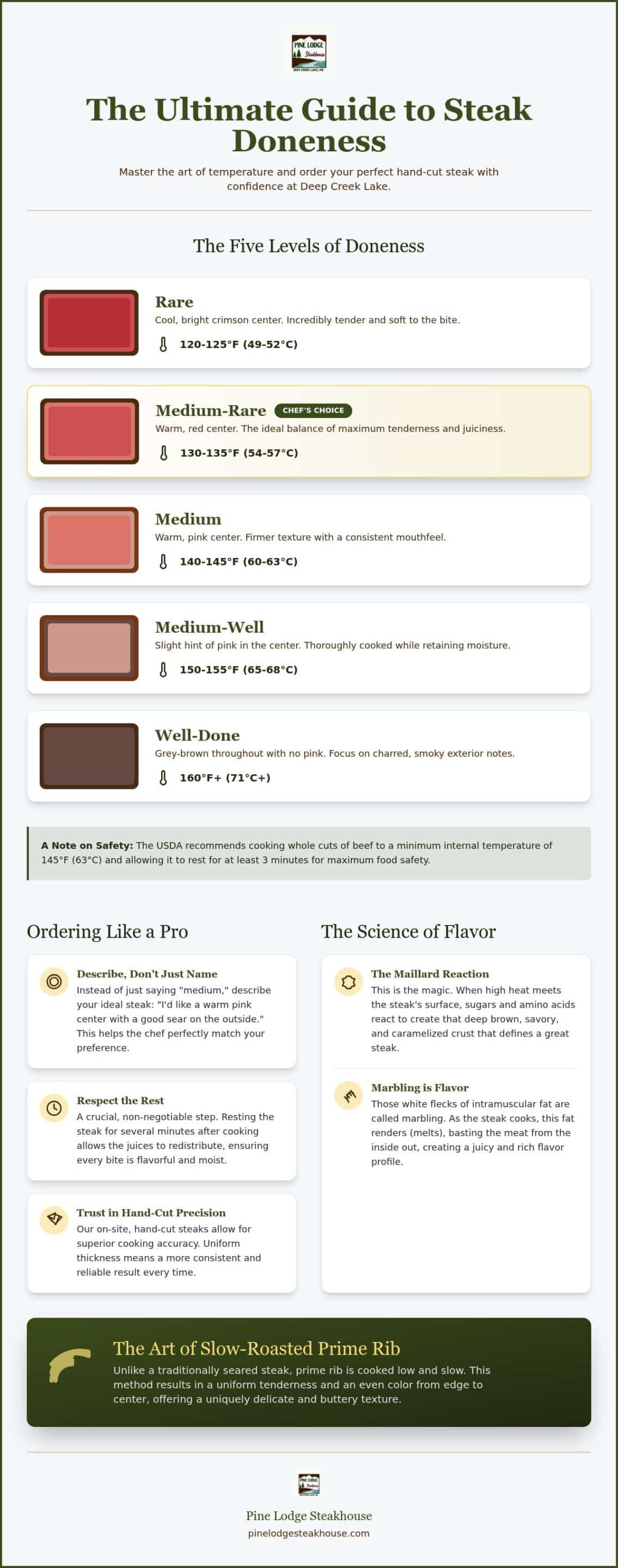
Selecting the right preparation is the most important decision you’ll make after choosing your cut. This steak doneness guide McHenry MD helps you navigate the five standard levels of cooking to ensure your meal matches your expectations. Each level offers a distinct sensory experience, from the silky texture of a rare center to the robust, smoky crust of a well-done steak. At Pine Lodge Steakhouse, we treat every hand-cut selection with the respect it deserves, ensuring the internal temperature aligns perfectly with the characteristics of the beef.
- Rare: This is the choice for the true meat purist. It features a cool, bright crimson center that is incredibly tender and soft to the bite.
- Medium-Rare: Widely considered the “Chef’s Choice,” this level provides a warm, red center. It offers the ideal balance of maximum tenderness and juice.
- Medium: A medium steak has a warm, pink center. The texture is firmer and more structured than a medium-rare cut, which many diners prefer for its consistent mouthfeel.
- Medium-Well: This preparation shows only a slight hint of pink in the very center. It’s a great option for those who want a thoroughly cooked steak that still retains some moisture.
- Well-Done: Cooked until no pink remains, this steak is grey-brown throughout. The focus here is on the charred, smoky notes developed on the exterior during the grilling process.
Visual and Temperature Breakdown
Precision is the hallmark of a professional kitchen. While visual cues like color are helpful, we rely on internal temperatures to guarantee accuracy. According to the Certified Angus Beef® brand, consistency is key to a great dining experience. For safety and quality in 2026, the USDA recommends specific benchmarks: 145°F for medium-rare (followed by a three-minute rest), 160°F for medium, and 170°F for well-done. Chefs also use the “Touch Test” to gauge doneness. A rare steak feels soft and spongy, similar to the fleshy part of your palm when relaxed, while a well-done steak feels firm and offers significant resistance.
Matching the Cut to the Doneness
The specific cut you choose should influence how you order it. A lean Filet Mignon is at its best when served rare or medium-rare because it lacks the heavy fat that needs melting. In contrast, a marbled Ribeye or our signature Slow Roasted Prime Rib often benefits from being cooked to medium. The slightly higher heat helps render the intramuscular fat, which bashes the meat in flavor and creates a more succulent bite. Because our steaks are hand-cut on-site, their generous thickness allows for a beautiful, gradual transition of color from the seared edge to the center. Before your next visit to Deep Creek Lake, explore our menu of hand-cut steaks to find the perfect pairing for your preferred doneness.
The Art of the Slow-Roasted Prime Rib
While a standard steak doneness guide McHenry MD often focuses on the high-heat intensity of a grill, our Slow Roasted Prime Rib follows a different set of rules. This isn’t a quick sear over an open flame; it’s a patient, hours-long journey into tenderness that requires a seasoned hand. Unlike a hand-cut ribeye that features a distinct gradient from the charred exterior to the pink center, prime rib is celebrated for its edge-to-edge uniformity. When prepared correctly, the entire slice maintains a consistent color and a buttery, succulent texture that melts the moment it hits your tongue. It’s the ultimate comfort food for a chilly evening by the lake.
Ordering prime rib at medium-rare is often considered the pinnacle of the dining experience. At this stage, the intramuscular fat has softened into a rich, silken state without tightening the muscle fibers, allowing the natural flavors of the beef to shine. For those who prefer a firmer texture or the intense flavor of a seasoned crust, we recommend requesting an “End Cut.” These outer pieces offer the smoky, well-done character of the roast’s exterior while remaining remarkably juicy inside. It’s a specialized way to enjoy the roast that satisfies those who crave a bit more crunch with their meal.
The Pine Lodge Slow-Roasting Process
Our commitment to quality means we don’t take shortcuts with our signature roast. We prepare our prime rib on-site, monitoring it meticulously to ensure every guest at Deep Creek Lake receives a perfect slice. We strictly adhere to USDA safe cooking temperatures, which recommend an internal temperature of 145°F followed by a necessary three-minute rest. This resting period is where the magic happens; it allows the natural juices to settle, which we then capture and serve as a savory “jus” to enhance every bite. This methodical approach is why we’ve remained a community staple since 2002.
Prime Rib Bites: A Preview of Perfection
If you’re unsure about which doneness level suits your palate, our Prime Rib Bites offer the perfect introduction. These tender morsels provide a concentrated taste of our slow-roasting expertise, making them a favorite for families and first-time visitors alike. They serve as a sensory preview of what makes our main entrees so special. For a truly memorable mountain-lodge meal, many of our guests pair these bites with our Creamy Crab Soup. The delicate sweetness of the Maryland-style crab creates a sophisticated surf and turf experience that perfectly complements the robust, savory notes of the slow-roasted beef.
Ordering Like a Local: Tips for Your Next Visit to McHenry
Ordering the perfect meal in Deep Creek Lake is about more than just picking a cut; it’s about the dialogue between you and our kitchen. This steak doneness guide McHenry MD encourages you to use descriptive language rather than just a single word. If you have a specific visual in mind, tell your server you’re looking for a “warm pink center” or a “cool, deep red heart.” These sensory cues help our chefs align their craft with your exact expectations. Our hand-cut process ensures that every steak has the necessary thickness to achieve these specific internal gradients without drying out the exterior.
For the adventurous diner, we often receive specialized requests like “Blue Rare” or “Pittsburgh Soot.” A blue rare steak is seared for just seconds, leaving the center cool and blue, while the Pittsburgh style (also known as Black and Blue) involves a heavy, blackened char on the outside while keeping the inside rare. These requests require high heat and a thick, hand-cut steak to prevent the middle from overcooking. Because we’ve been a community staple since 2002, our kitchen is well-versed in these traditional steakhouse techniques, ensuring your meal is prepared with self-assured expertise.
Pairing Bourbon with Your Steak Doneness
Our specialty bourbon selection isn’t just for sipping; it’s a tool to enhance how you perceive the flavors and fats in your beef. High-rye bourbons have a spicy, assertive kick that cuts through the buttery richness of a medium-rare ribeye, cleansing the palate between bites. If you prefer your steak medium-well or well-done, try a wheated bourbon. The sweeter, smoother profile of wheat-heavy mash bills harmonizes beautifully with the caramelized, smoky sugars of a charred exterior. Our staff can help you navigate our bar to find a pairing that makes the most of your chosen temperature.
Family and Group Dining Considerations
Dining with a large group at Pine Lodge has been a tradition for many McHenry families since we opened our doors. Our hand-cut process allows for incredible precision, even when a table of ten has ten different preferences. We can adjust the thickness of our cuts to ensure a well-done steak arrives at the same time as a rare one, keeping the rhythm of your meal seamless. We also offer a dedicated kids menu, providing a welcoming way to introduce younger guests to the textures of premium beef. Our lodge environment, with its warm wood and crackling fires, provides a relaxed space to experiment with a new doneness level you’ve never tried before.
Ready to experience the local standard for hospitality? View our specialty bourbon selection and dinner menu to plan your perfect evening.
Why Pine Lodge Steakhouse is the Destination for Steak in Deep Creek
Choosing the right temperature is only half the battle; the other half is the quality of the meat itself. This steak doneness guide McHenry MD has provided the tools to order with confidence, but those standards only hold true when the beef is handled with professional care. At Pine Lodge Steakhouse, we don’t rely on pre-portioned, vacuum-sealed cuts. Instead, our chefs hand-cut each steak on-site to ensure the ideal thickness required for a precise sear and a consistent internal temperature. This dedication to craftsmanship is the cornerstone of our identity, providing a level of freshness that mass-produced alternatives simply cannot replicate.
The physical environment of our lodge enhances every bite. Picture yourself settling into a sturdy wooden chair as the warmth from our stone fireplace fills the room. It’s a setting designed for lingering over a second glass of bourbon while you enjoy the perfect texture of a hand-cut ribeye. Whether you’re a lifelong resident or a first-time visitor to Deep Creek Lake, our goal is to make you feel like an invited guest in our home. We take immense pride in being the local authority on steak, ensuring that every meal is a celebration of mountain-lodge tradition.
This dedication to the art of the grill is a passion shared by top-tier steakhouses across the country. For example, if your travels take you to South Florida, you can discover Malbec Grill to experience their authentic Argentine-inspired approach to premium grilled steaks and scratch-made cuisine.
Beyond the American steakhouse tradition, other cultures also master the craft of heat and protein; for instance, you can learn more about the precision involved in an authentic Japanese teppanyaki experience at Leoka Teppanyaki.
The Legacy of Hand-Cut Quality
The precision of our cooking starts long before the meat touches the grill. Our chefs meticulously select and cut each steak to ensure the thickness is exactly right for your requested doneness. A hand-cut steak offers a superior sear because the surface area is perfectly prepared for the flame, leading to that coveted caramelized crust. This thickness acts as a buffer, allowing the center to reach the perfect temperature without the exterior becoming tough or dry. Pine Lodge Steakhouse has been a locally owned staple for over two decades, serving the McHenry community with pride since 2002.
Plan Your Visit to Pine Lodge
Conveniently located in the heart of McHenry, Pine Lodge is the ideal destination for a restorative meal after a day on the mountain trails or exploring the lake. If you’re looking for a more casual introduction to our menu, join us for Happy Hour, held Sunday through Thursday from 4:00 PM to 6:00 PM. It’s the perfect time to sample our Prime Rib Bites or explore our specialty bourbon selection in the relaxed atmosphere of our bar and lounge. We invite you to experience the hospitality that has made us a Deep Creek favorite for over 20 years. Join us at Pine Lodge Steakhouse for your next hand-cut steak dinner and put your new knowledge of steak temperatures to the test.
Experience the Perfect Cut at Deep Creek Lake
Mastering the nuances of temperature and texture ensures that every meal is an intentional celebration of flavor. This steak doneness guide McHenry MD has equipped you with the terminology to communicate clearly with our kitchen, whether you’re seeking the silken tenderness of a rare filet or the robust, smoky crust of a well-done ribeye. You now understand how our on-site hand-cutting process and slow-roasting expertise provide a level of precision that makes every bite memorable. True hospitality means ensuring your plate matches your preference every single time.
Since 2002, we’ve taken pride in being a locally owned staple where families and travelers gather to enjoy the finest hand-cut steaks and slow-roasted prime rib in a cozy, rustic setting. When you pair your perfectly prepared entree with a selection from our premier specialty bourbon bar, you’re not just eating; you’re creating a lasting mountain-lodge memory. Book your table at Pine Lodge Steakhouse today and let our seasoned hosts welcome you to the table. We look forward to serving you a meal that’s exactly as you envisioned it.
Frequently Asked Questions
What is the most popular steak doneness ordered at Pine Lodge Steakhouse?
Medium-rare is the most frequent request at Pine Lodge Steakhouse. This preference is a central theme in our steak doneness guide McHenry MD because it preserves the essential moisture of our premium beef. Many Deep Creek Lake visitors choose this level because it allows the natural marbling to soften without tightening the muscle fibers. It’s the ideal way to enjoy the rich, savory profile of our signature hand-cut selections.
Is it safe to eat a steak that is still red in the middle?
Yes, it’s safe to consume steak with a red center as long as it reaches a minimum internal temperature of 145°F and rests for three minutes. Unlike ground beef, which must reach 160°F, whole-muscle steaks are denser and bacteria typically reside only on the surface. Our kitchen follows these USDA safety protocols to ensure every meal is both delicious and secure for our guests while maintaining peak tenderness and flavor.
How does Pine Lodge ensure my steak is cooked to the exact temperature I requested?
Our chefs use a combination of precision meat thermometers and the traditional touch test to monitor every hand-cut selection. This dual-verification method is a core part of our steak doneness guide McHenry MD. Because we cut our steaks on-site, we know the exact density of each piece. This allows us to adjust grill times for consistent, reliable results that match your specific order every time you visit our lodge.
Can I order the slow-roasted prime rib well-done?
You can certainly enjoy our slow-roasted prime rib well-done by requesting an end cut. These outer pieces are naturally more cooked and carry a robust, seasoned crust from the roasting process. If end cuts are unavailable, we can finish a center slice on the grill to reach your preferred temperature while maintaining the signature juiciness that our McHenry guests have loved since 2002. It’s a flavorful choice for any palate.
What is the difference between rare and medium-rare for a hand-cut steak?
The primary difference between rare and medium-rare lies in the internal temperature and the warmth of the center. A rare steak features a cool, bright red middle with a soft texture, while a medium-rare steak has a warm red center and a slightly firmer bite. This subtle shift in temperature is what helps the intramuscular fat begin to render, which significantly enhances the overall flavor profile and succulence of the beef.
Does the thickness of the steak affect how I should order its doneness?
Thickness plays a vital role in how heat penetrates the meat. Thicker hand-cut steaks are actually easier to cook to a precise rare or medium-rare because they provide a larger buffer between the seared exterior and the center. If you prefer a well-done steak, a thinner cut might be more appropriate to ensure the middle is cooked through without excessively charring the outside of the meat or losing its natural moisture during the process.
What happens if my steak is not cooked to my liking?
Your satisfaction is our absolute priority, and we’ll immediately correct any steak that doesn’t meet your expectations. If a steak is undercooked, we’ll return it to the grill to reach the proper temperature. If it’s overcooked, our chefs will hand-cut a fresh selection and prepare it to your liking. We want your mountain-lodge dining experience to be flawless and celebratory from the very first bite to the last flavorful morsel.
Why do chefs recommend medium-rare for most hand-cut steaks?
Chefs recommend medium-rare because it’s the point where the beef’s flavor and texture are in perfect harmony. At this stage, the proteins haven’t become tough, and the fat has just begun to melt, baste, and flavor the meat from within. It’s the most effective way to experience the high-quality craftsmanship behind our hand-cut steaks while ensuring the meat remains exceptionally juicy, tender, and rich with natural savory notes.